Heubel HeritageAncient ArtAntike KunstArte Antiguo

Heubel Heritage · A JourneyHeubel Heritage · Ein RundgangHeubel Heritage · Un recorrido

Four thousand years,
within four walls.

Viertausend Jahre,
in vier Wänden.

Cuatro mil años,
entre cuatro paredes.

What follows is a walk along the length of a single collection, from Neolithic clay to the masks of the twentieth century, assembled over a lifetime and kept, quietly, on Mallorca.

Was folgt, ist ein Gang durch eine einzige Sammlung, vom neolithischen Ton bis zu den Masken des zwanzigsten Jahrhunderts: über ein Leben zusammengetragen und still auf Mallorca bewahrt.

Lo que sigue es un paseo a lo largo de una sola colección, del barro neolítico a las máscaras del siglo XX, reunida durante toda una vida y conservada, en silencio, en Mallorca.

~9,500objectsObjekteobjetos
~4,000yearsJahreaños
5continentsKontinentecontinentes
60+countries of originHerkunftsländerpaíses de origen
c. 2000–500 BCE

I · The oldest handsDie ältesten HändeLas manos más antiguas

Where the collection begins

Wo die Sammlung beginnt

Donde la colección comienza

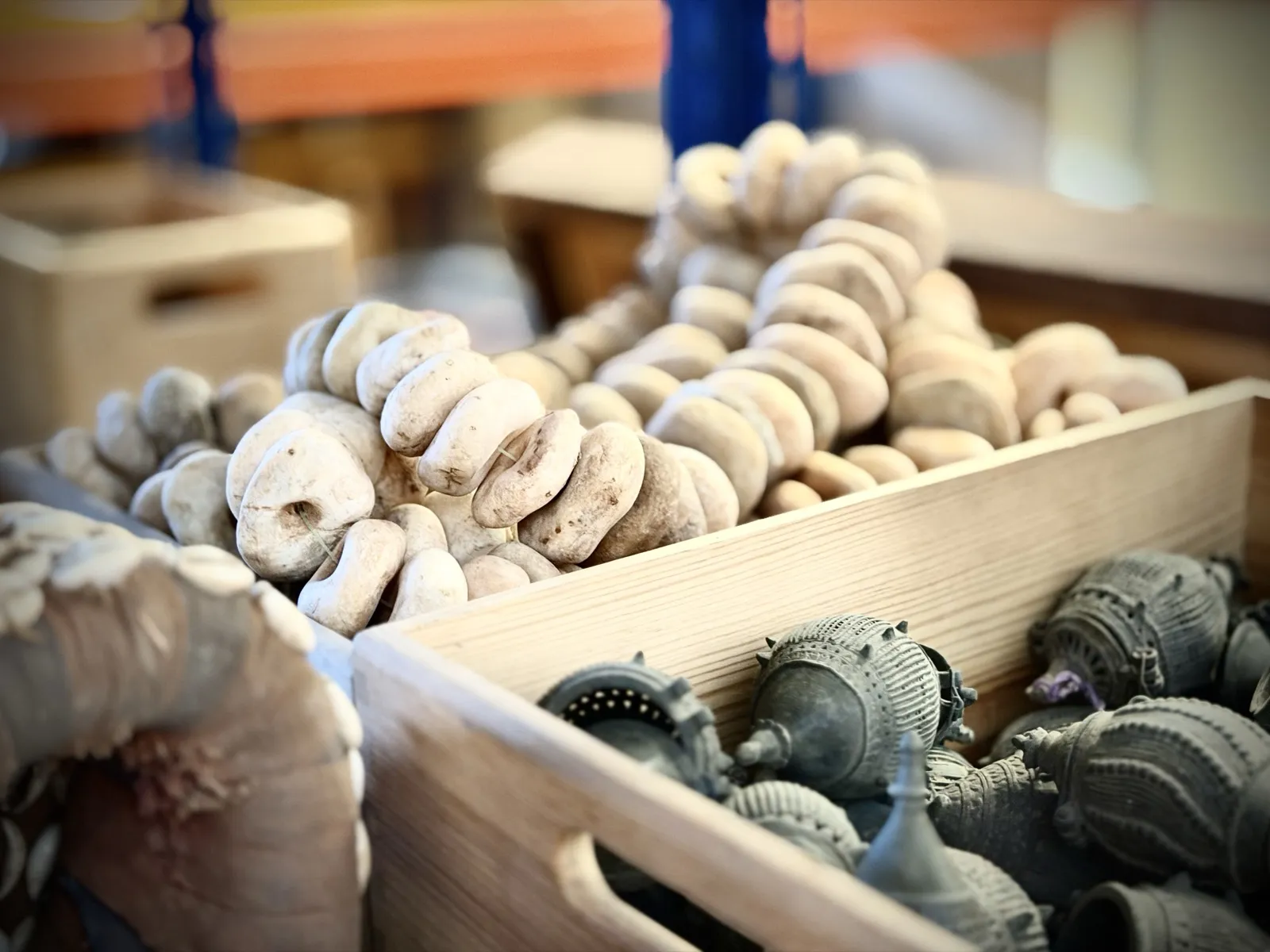
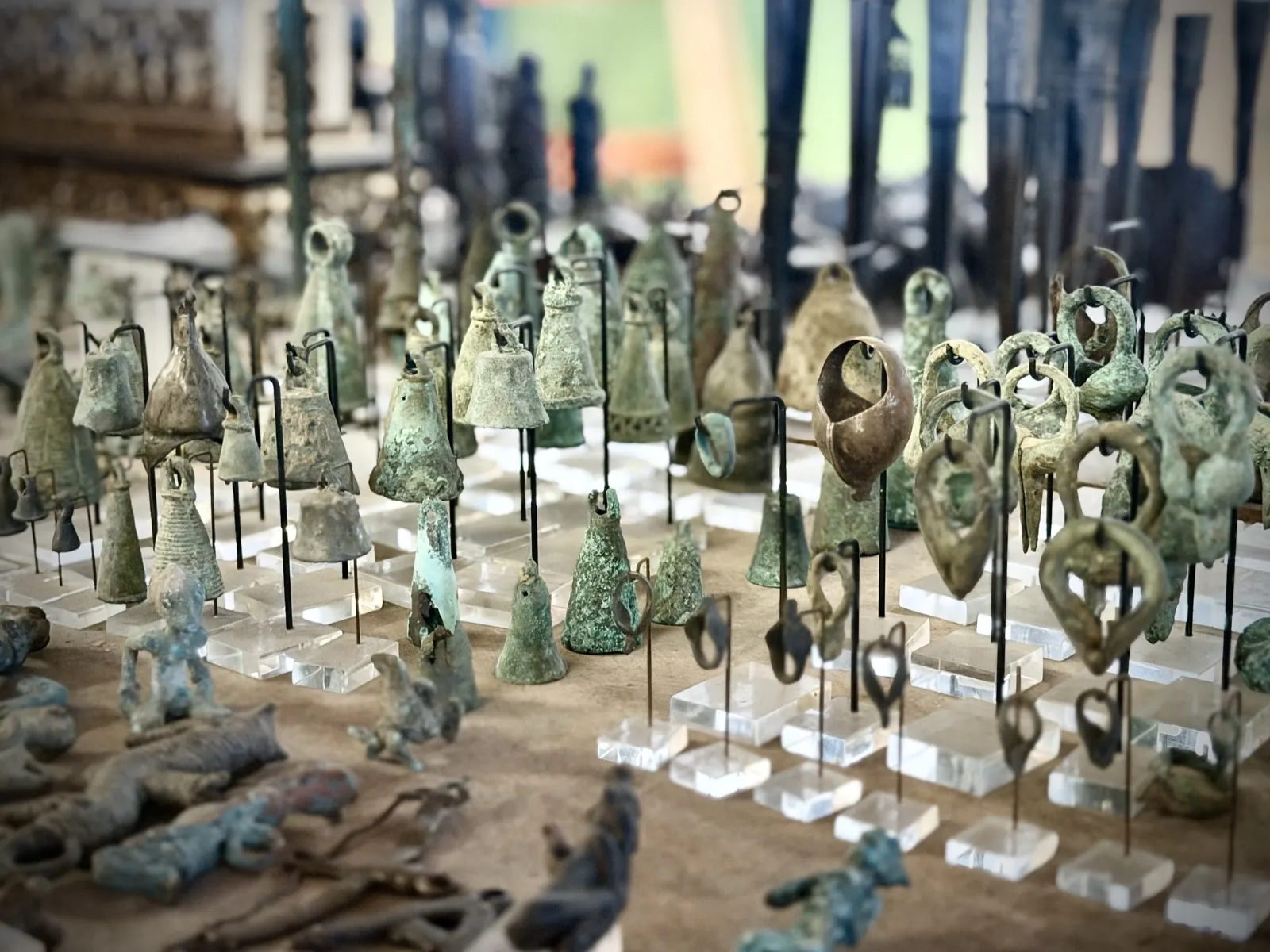
The deepest layer is the quietest: painted earthenware and the green of early bronze. Neolithic jars carry geometric bands drawn before writing reached the region; cast bells, rings and ornaments survive from the Bronze Age as the first metal ever worked into ritual and adornment.

Die tiefste Schicht ist die leiseste: bemalte Irdenware und das Grün früher Bronze. Neolithische Gefäße tragen geometrische Bänder, gezeichnet, bevor die Schrift die Region erreichte; gegossene Glocken, Ringe und Zierrat überdauern aus der Bronzezeit als erstes je zu Ritus und Schmuck verarbeitetes Metall.

La capa más profunda es la más silenciosa: cerámica pintada y el verde del bronce temprano. Las tinajas neolíticas llevan bandas geométricas trazadas antes de que la escritura llegara a la región; campanas, anillos y adornos fundidos sobreviven de la Edad del Bronce como el primer metal trabajado para el rito y el ornamento.
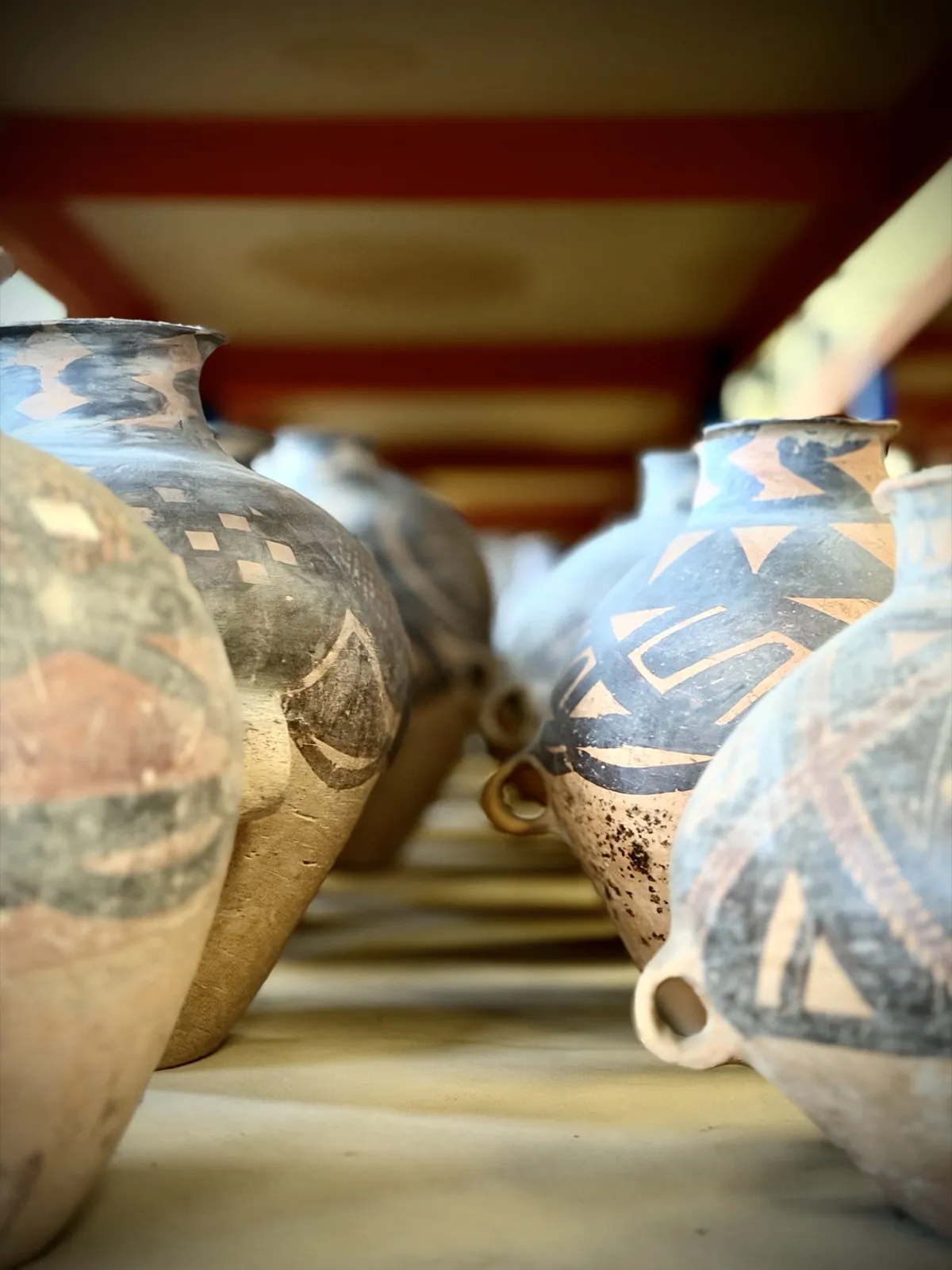
Neolithic painted earthenware jars with geometric decoration
Neolithic-style painted jars: geometric decoration in iron and manganese pigment.
Bemalte Gefäße neolithischen Typs: geometrischer Dekor in Eisen- und Manganpigment.
Tinajas pintadas de tipo neolítico: decoración geométrica en pigmento de hierro y manganeso.
Bronze-Age bells, rings and cast ornaments
Excavated lots of stone rings and bronze fittings
Bronze-Age metalwork: bells, rings and ornaments, verdigris intact.
Bronzezeitliches Metall: Glocken, Ringe und Zierrat, mit erhaltener Patina.
Metalistería de la Edad del Bronce: campanas, anillos y adornos, con la pátina intacta.
c. 500 BCE – 200 CE

II · West AfricaWestafrikaÁfrica occidental

Nok: Africa's elder sculpture

Nok: Afrikas ältere Bildhauerei

Nok: la escultura más antigua de África

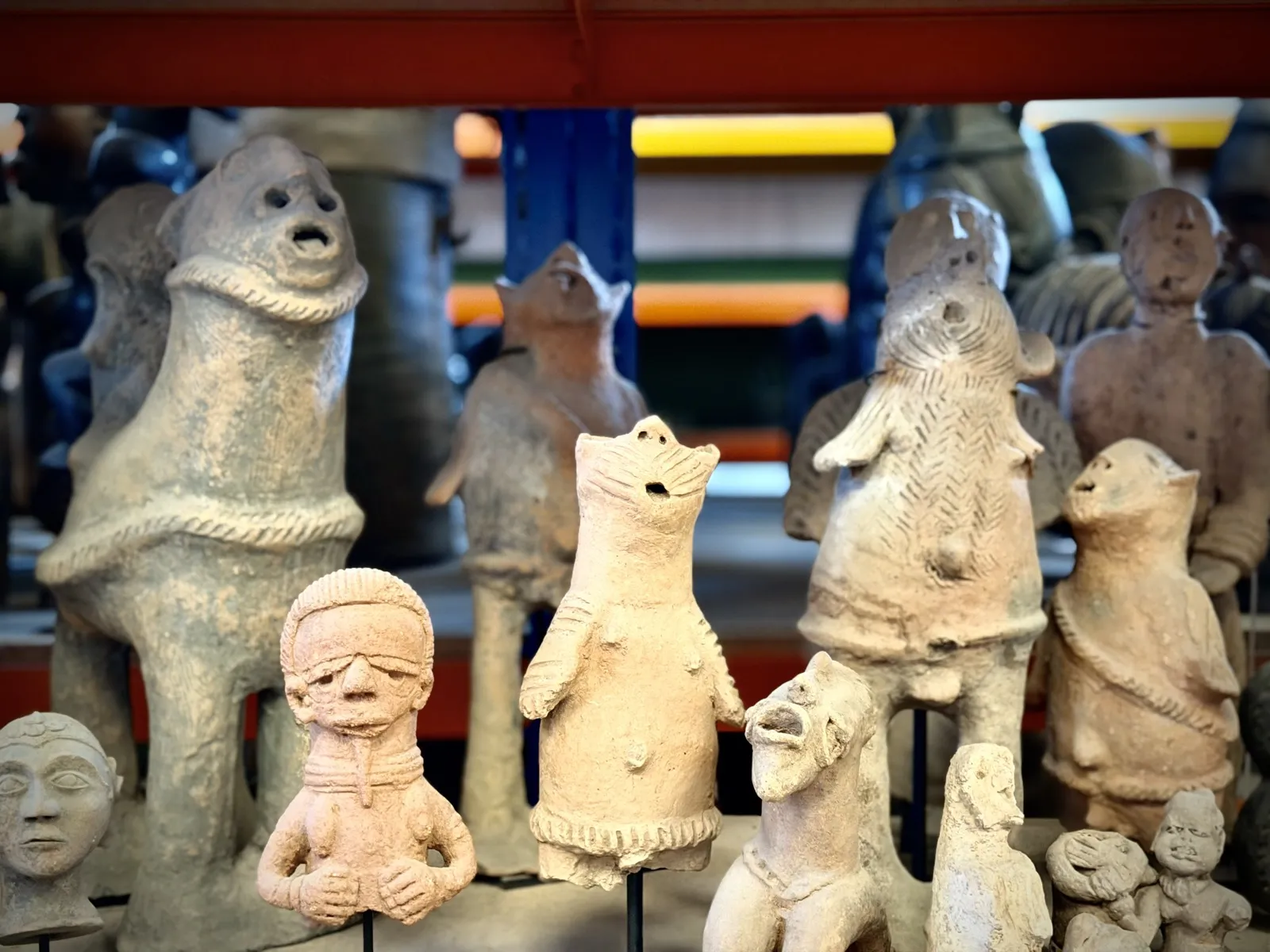
From the Nigerian plateau comes one of the oldest sculptural traditions on the continent: terracotta figures with triangular eyes and an unmistakable stillness. Their dating follows conservative, museum-aligned ranges: a reminder that here, age is measured in whole millennia.

Vom nigerianischen Hochland stammt eine der ältesten Bildhauertraditionen des Kontinents: Terrakotta-Figuren mit dreieckigen Augen und einer unverkennbaren Ruhe. Ihre Datierung folgt konservativen, museumsnahen Spannen: hier wird Alter in ganzen Jahrtausenden gemessen.

De la meseta nigeriana procede una de las tradiciones escultóricas más antiguas del continente: figuras de terracota con ojos triangulares y una quietud inconfundible. Su datación sigue rangos conservadores, alineados con los museos: aquí la edad se mide en milenios enteros.

Nok-style terracotta figures
Nok-tradition terracotta: figures and zoomorphic forms.
Terrakotta der Nok-Tradition: Figuren und tierförmige Gebilde.
Terracota de la tradición Nok: figuras y formas zoomorfas.
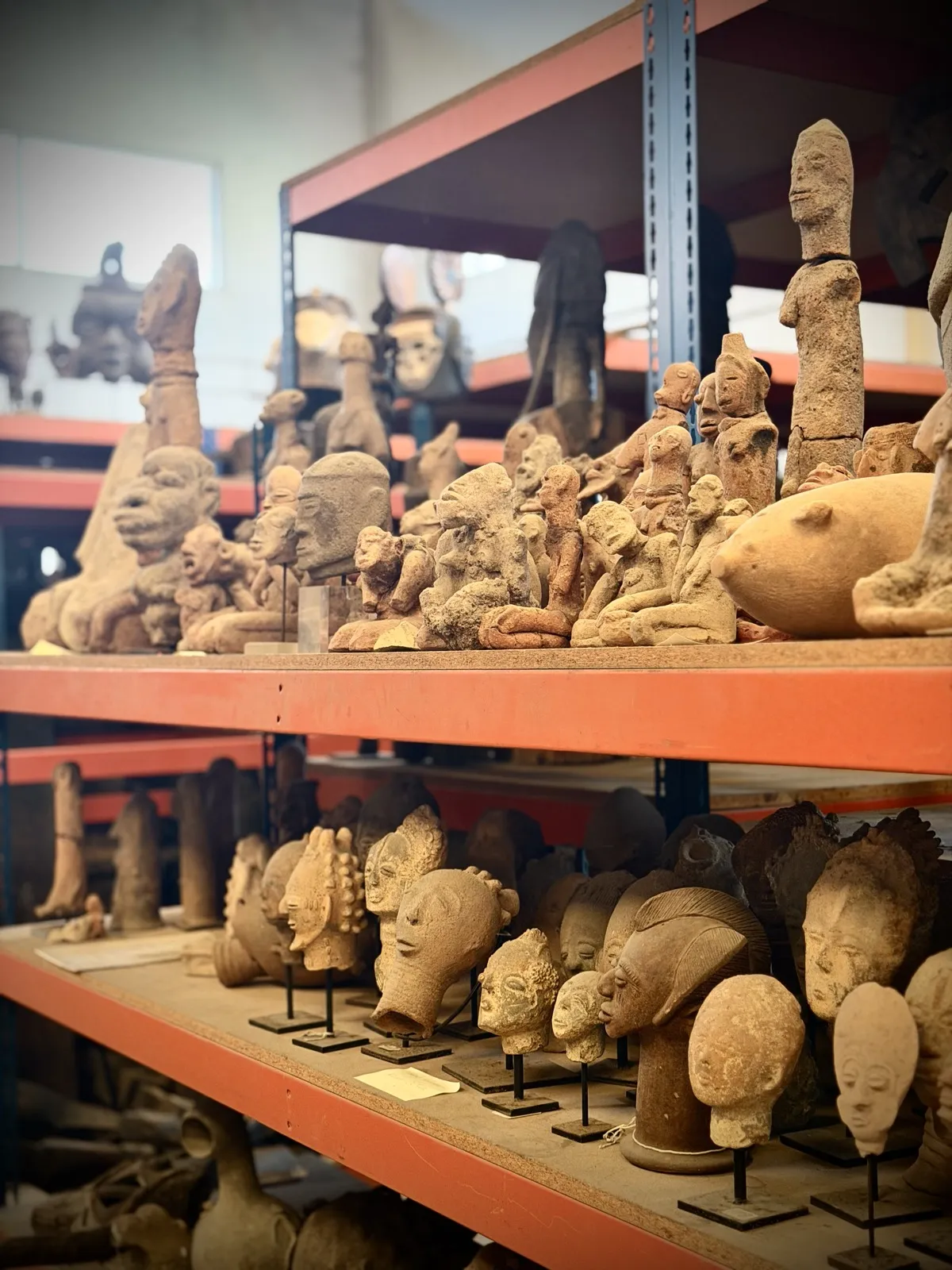
Shelves of terracotta figures and heads
Rows of terracotta on the storage shelves: a single tradition, in depth.
Reihen von Terrakotta im Lagerregal: eine einzige Tradition, in der Tiefe.
Hileras de terracota en las estanterías del almacén: una sola tradición, en profundidad.
1st–3rd century CE

III · Where East met WestWo Ost und West sich trafenDonde Oriente y Occidente se encontraron

Gandhara: a Greek Buddha

Gandhara: ein griechischer Buddha

Gandhara: un Buda griego

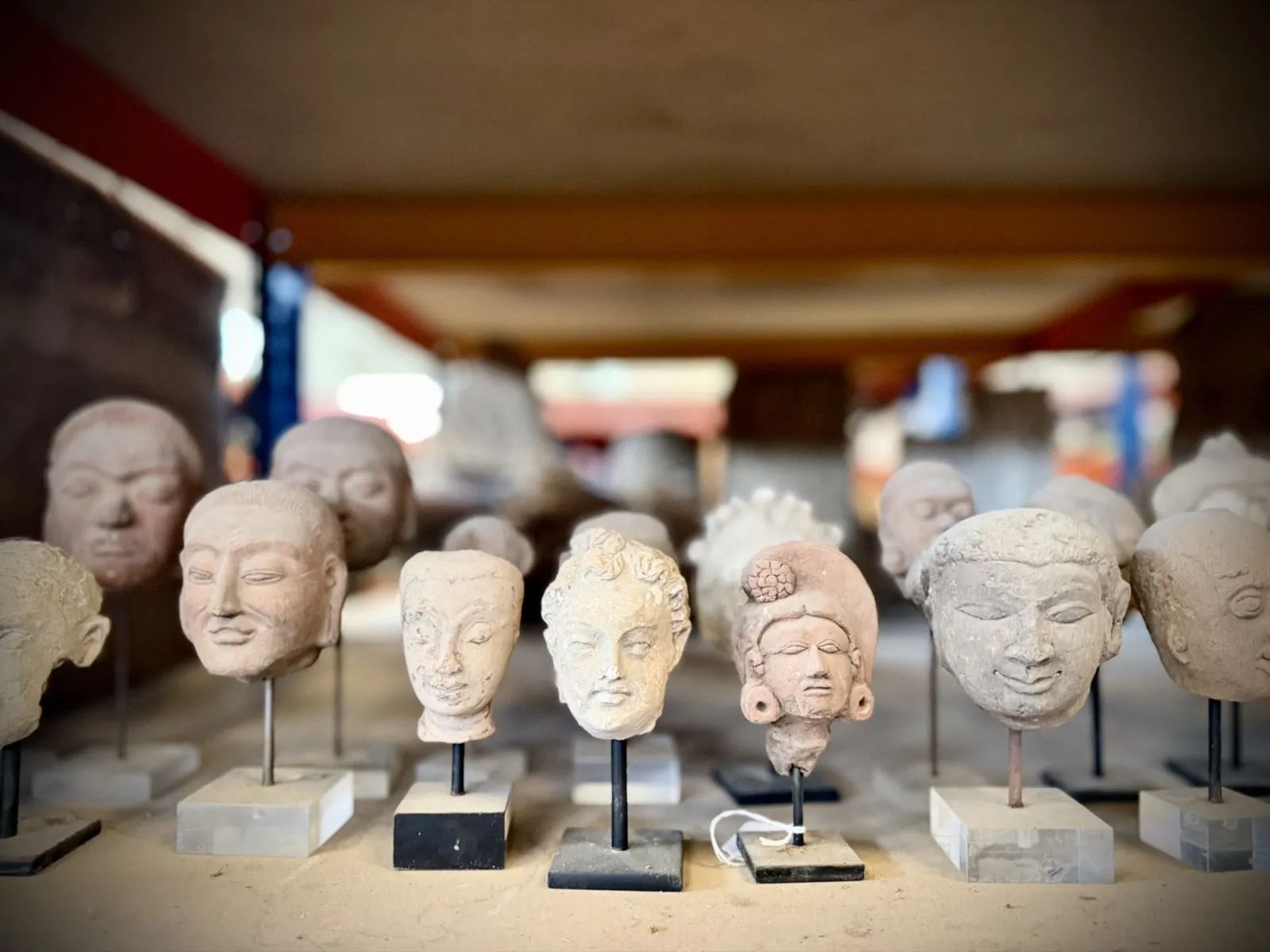
Along the old trade roads of today's Pakistan and Afghanistan, Hellenistic drapery and classical faces met Buddhist devotion. The result is unmistakable: wavy hair, heavy eyelids, a Mediterranean profile on a Buddhist body: the moment two worlds shared a single chisel.

An den alten Handelsstraßen des heutigen Pakistan und Afghanistan trafen hellenistischer Faltenwurf und klassische Gesichter auf buddhistische Verehrung. Das Ergebnis ist unverkennbar: gewelltes Haar, schwere Lider, ein mediterranes Profil auf buddhistischem Körper: der Moment, in dem zwei Welten denselben Meißel führten.

A lo largo de las antiguas rutas comerciales del actual Pakistán y Afganistán, los paños helenísticos y los rostros clásicos se encontraron con la devoción budista. El resultado es inconfundible: cabello ondulado, párpados pesados, un perfil mediterráneo sobre un cuerpo budista: el momento en que dos mundos compartieron un mismo cincel.

Gandhara-style stucco and schist heads with classical features
Gandhara-tradition heads in stucco and schist: classical features, Buddhist subject.
Köpfe der Gandhara-Tradition in Stuck und Schiefer: klassische Züge, buddhistisches Sujet.
Cabezas de la tradición de Gandhara en estuco y esquisto: rasgos clásicos, tema budista.
Han–Tang, 206 BCE – 907 CE

IV · ChinaChinaChina

An army for the afterlife

Ein Heer für das Jenseits

Un ejército para el más allá

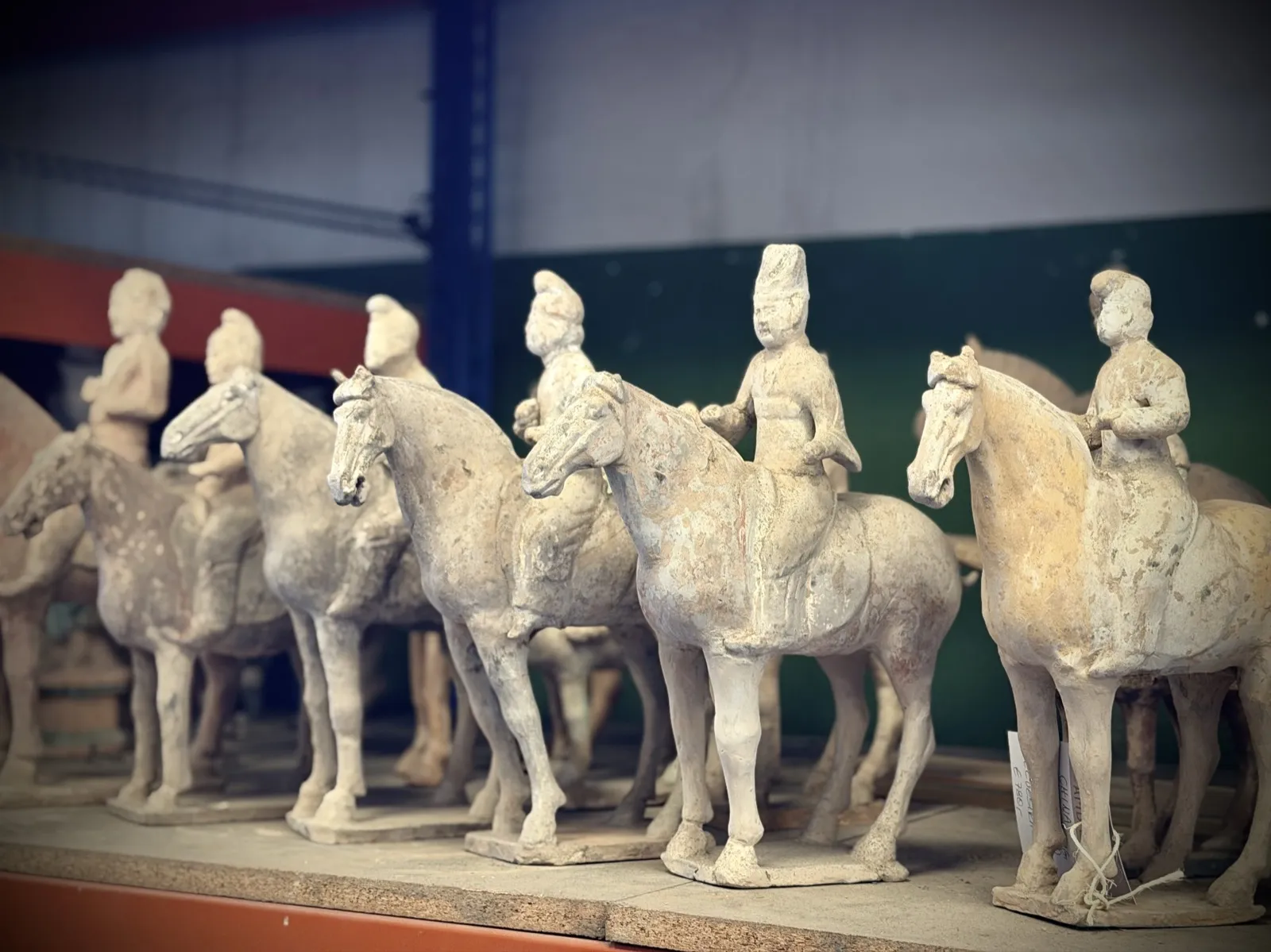
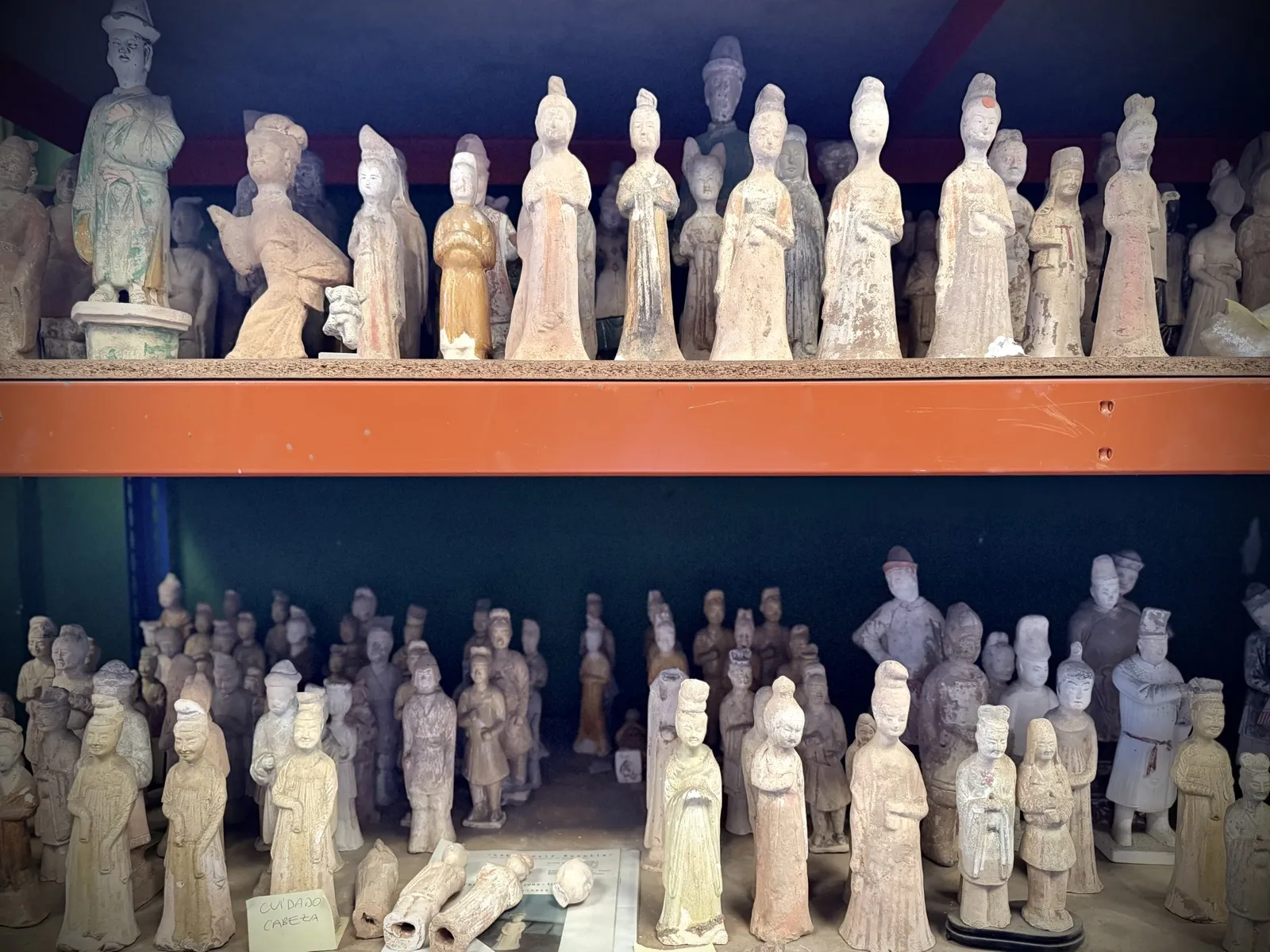
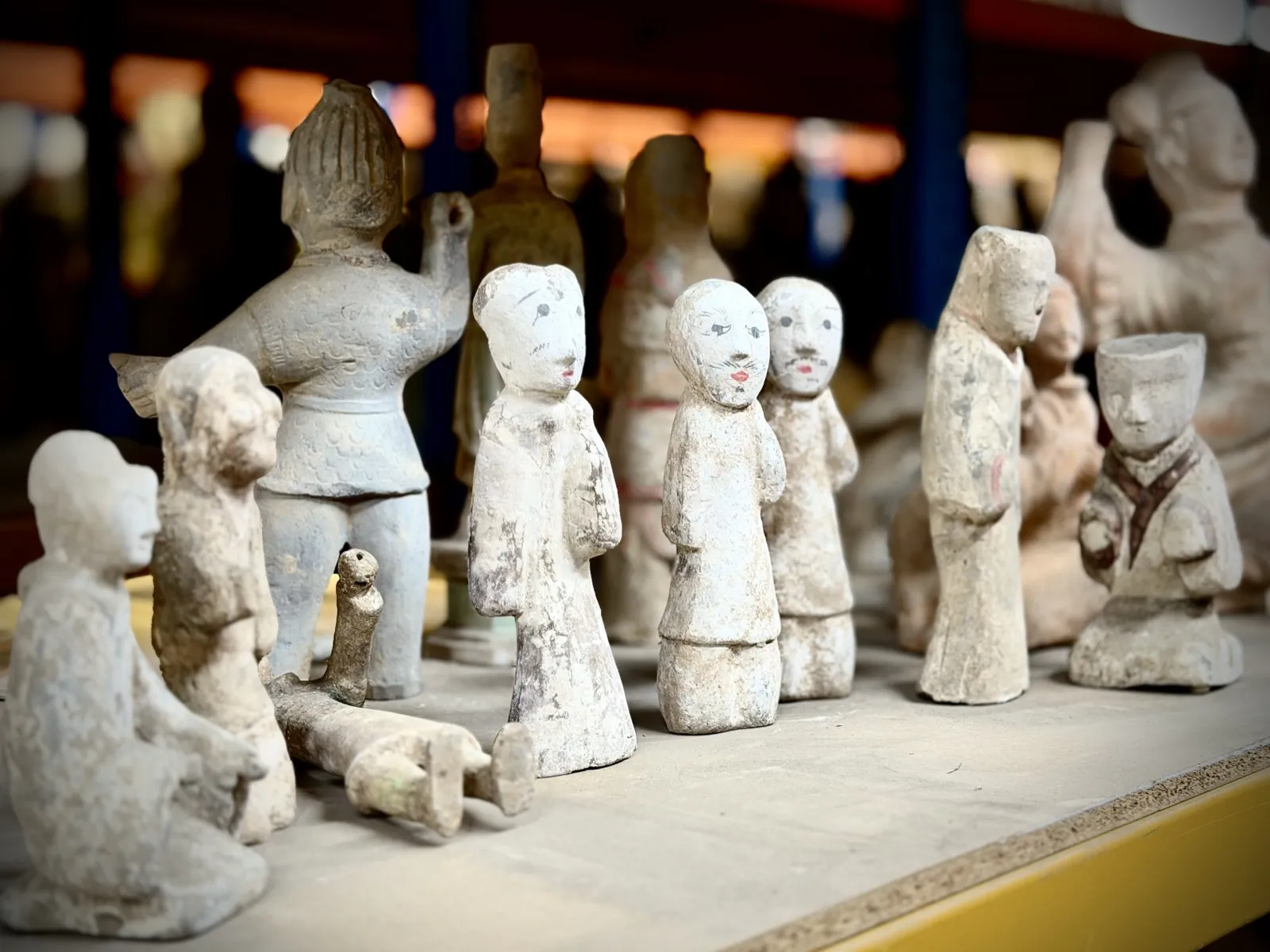
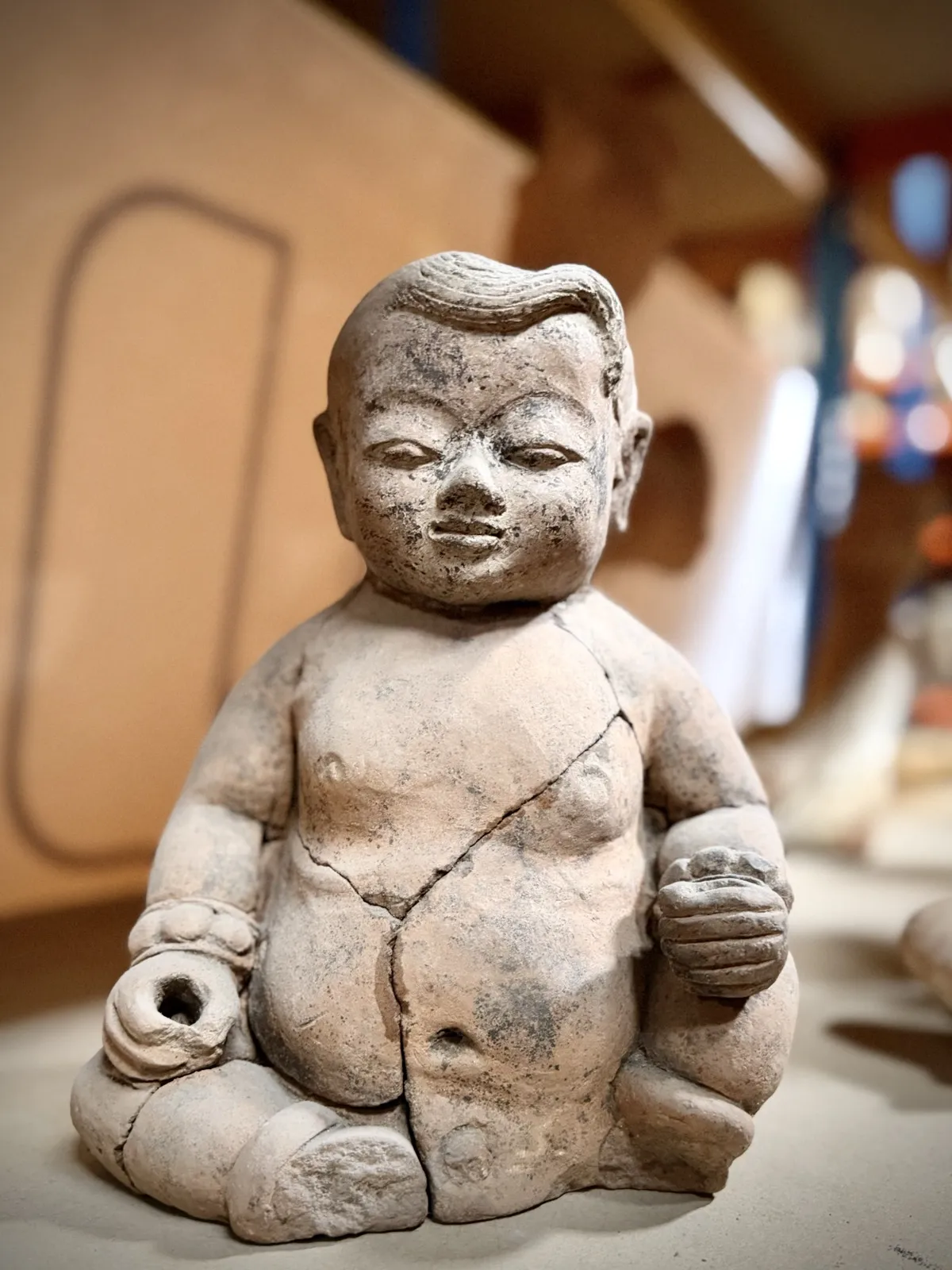
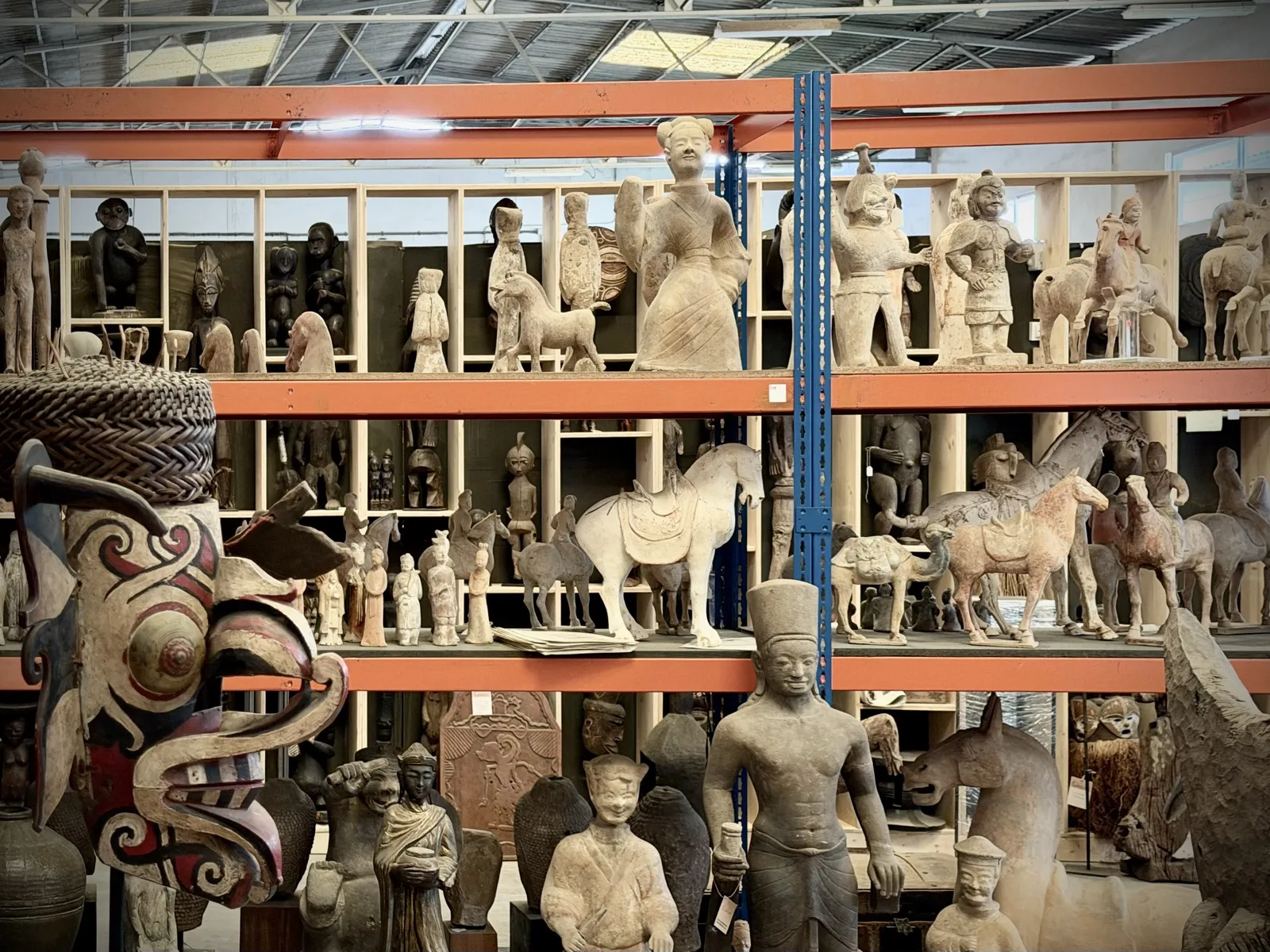
Chinese tombs were furnished for eternity. Terracotta cavalry, court ladies in flowing robes, attendants and musicians: mingqi, spirit-goods buried to serve the dead. Two thousand years later they stand in ranks again, painted traces still clinging to the clay.

Chinesische Gräber wurden für die Ewigkeit ausgestattet. Terrakotta-Kavallerie, Hofdamen in fließenden Gewändern, Diener und Musiker: mingqi, Geistergaben, den Toten mitgegeben. Zweitausend Jahre später stehen sie wieder in Reih und Glied, Farbspuren noch am Ton.

Las tumbas chinas se amueblaban para la eternidad. Caballería de terracota, damas de la corte con túnicas fluidas, sirvientes y músicos: mingqi, bienes espirituales enterrados para servir a los muertos. Dos mil años después vuelven a formar en filas, con restos de pintura aún adheridos al barro.

Chinese terracotta tomb cavalry, horses with riders
Terracotta cavalry: mounted tomb figures in the Han–Tang manner.
Terrakotta-Kavallerie: berittene Grabfiguren im Han-Tang-Stil.
Caballería de terracota: figuras funerarias a caballo al estilo Han-Tang.
Tang-dynasty court ladies in terracotta
Painted terracotta tomb attendants
Seated terracotta tomb figure
Court ladies, attendants and a seated figure: the household of the tomb.
Hofdamen, Diener und eine sitzende Figur: der Hausstand des Grabes.
Damas de la corte, sirvientes y una figura sedente: la casa de la tumba.
Khmer / Angkor, 9th–13th c.

V · CambodiaKambodschaCamboya

The sacred body in stone

Der heilige Körper in Stein

El cuerpo sagrado en piedra

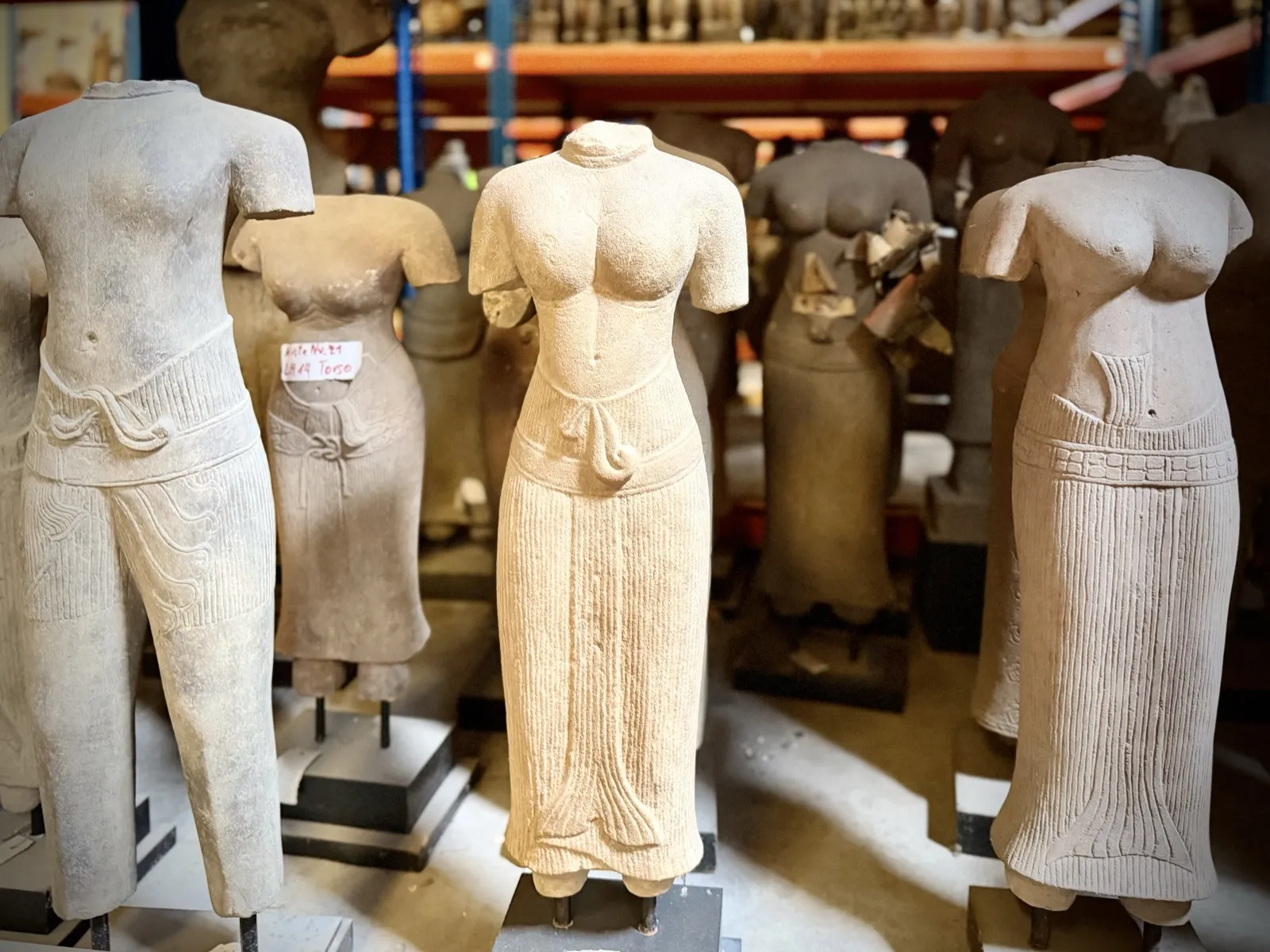
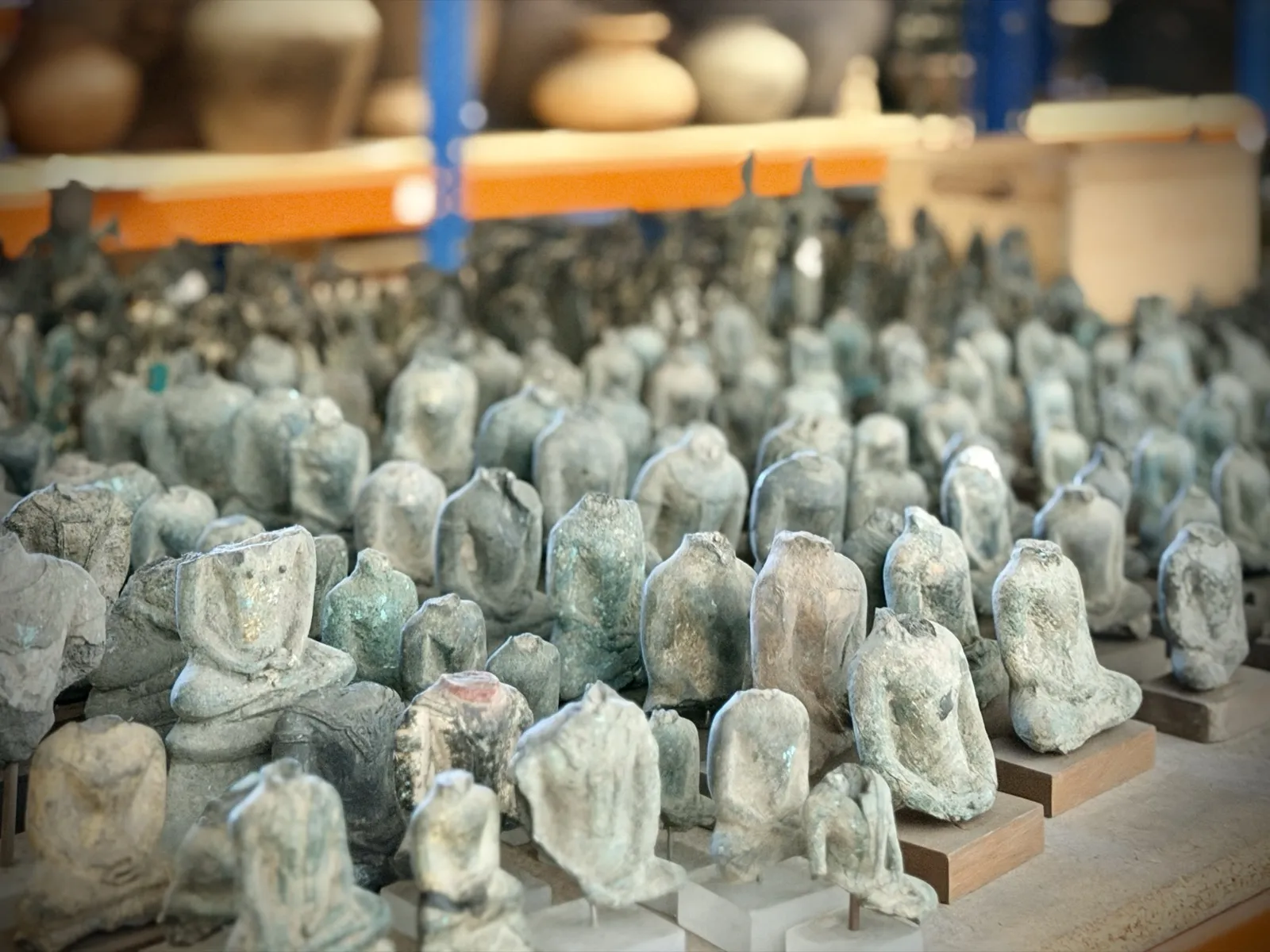
From the world of Angkor: sandstone torsos, headless yet complete, the human form abstracted into pure sacred geometry. Even fragmentary, the poise of the shoulders and the fall of a carved skirt carry the whole devotional idea.

Aus der Welt von Angkor: Sandstein-Torsi, kopflos und doch vollständig, die menschliche Gestalt zu reiner heiliger Geometrie abstrahiert. Selbst fragmentarisch tragen die Haltung der Schultern und der Fall eines gemeißelten Rocks die ganze devotionale Idee.

Del mundo de Angkor: torsos de arenisca, sin cabeza y sin embargo completos, la forma humana abstraída en pura geometría sagrada. Incluso fragmentarios, el porte de los hombros y la caída de una falda tallada transmiten toda la idea devocional.

Khmer sandstone torsos from the Angkor period
Khmer-tradition sandstone torsos: the figure reduced to its essential grace.
Sandstein-Torsi der Khmer-Tradition: die Figur auf ihre wesentliche Anmut reduziert.
Torsos de arenisca de la tradición jemer: la figura reducida a su gracia esencial.
Buddhist Asia, 6th–19th c.

VI · Asia in bronze & stoneAsien in Bronze & SteinAsia en bronce y piedra

A thousand faces of the Buddha

Tausend Gesichter des Buddha

Mil rostros del Buda

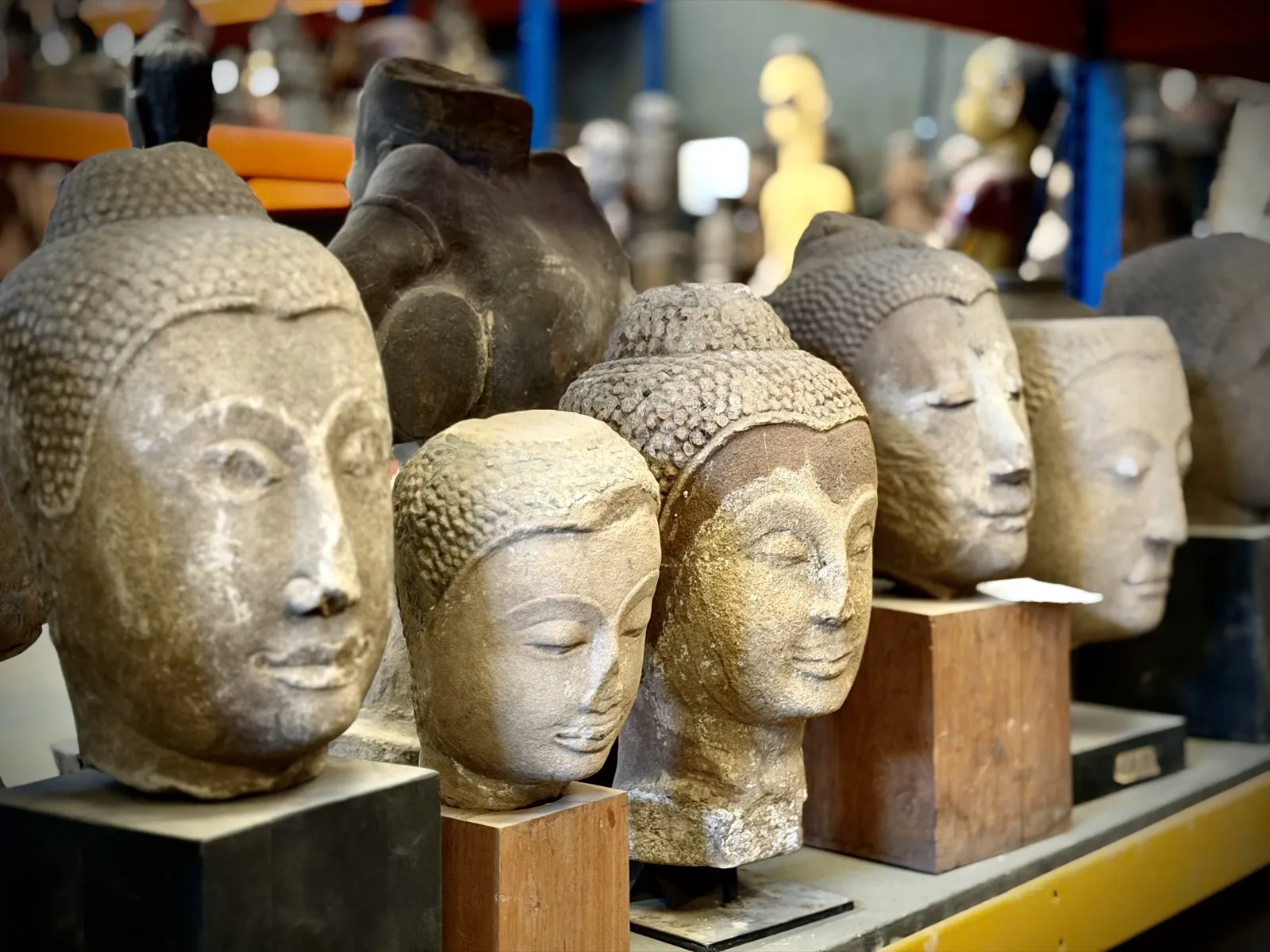
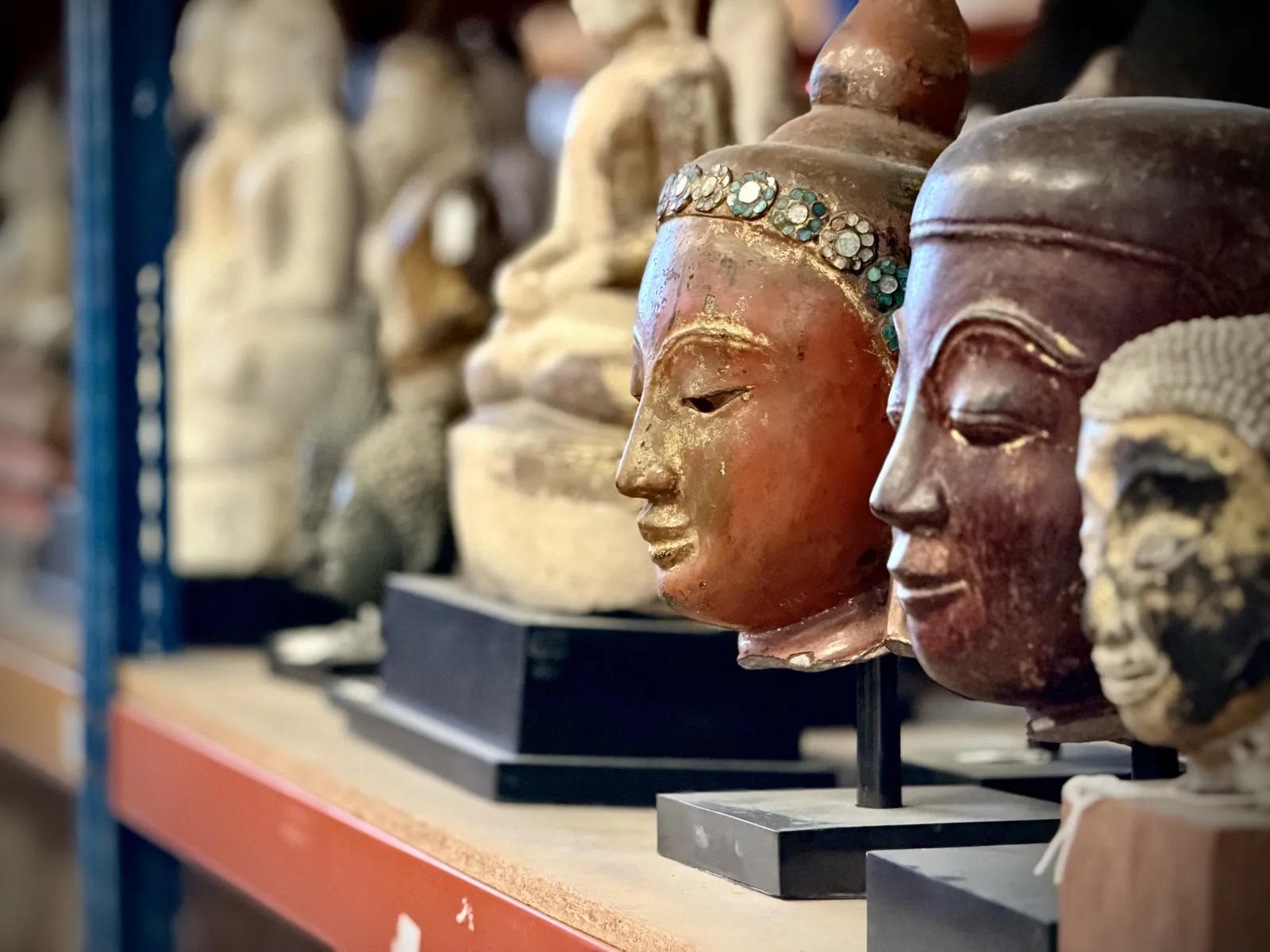
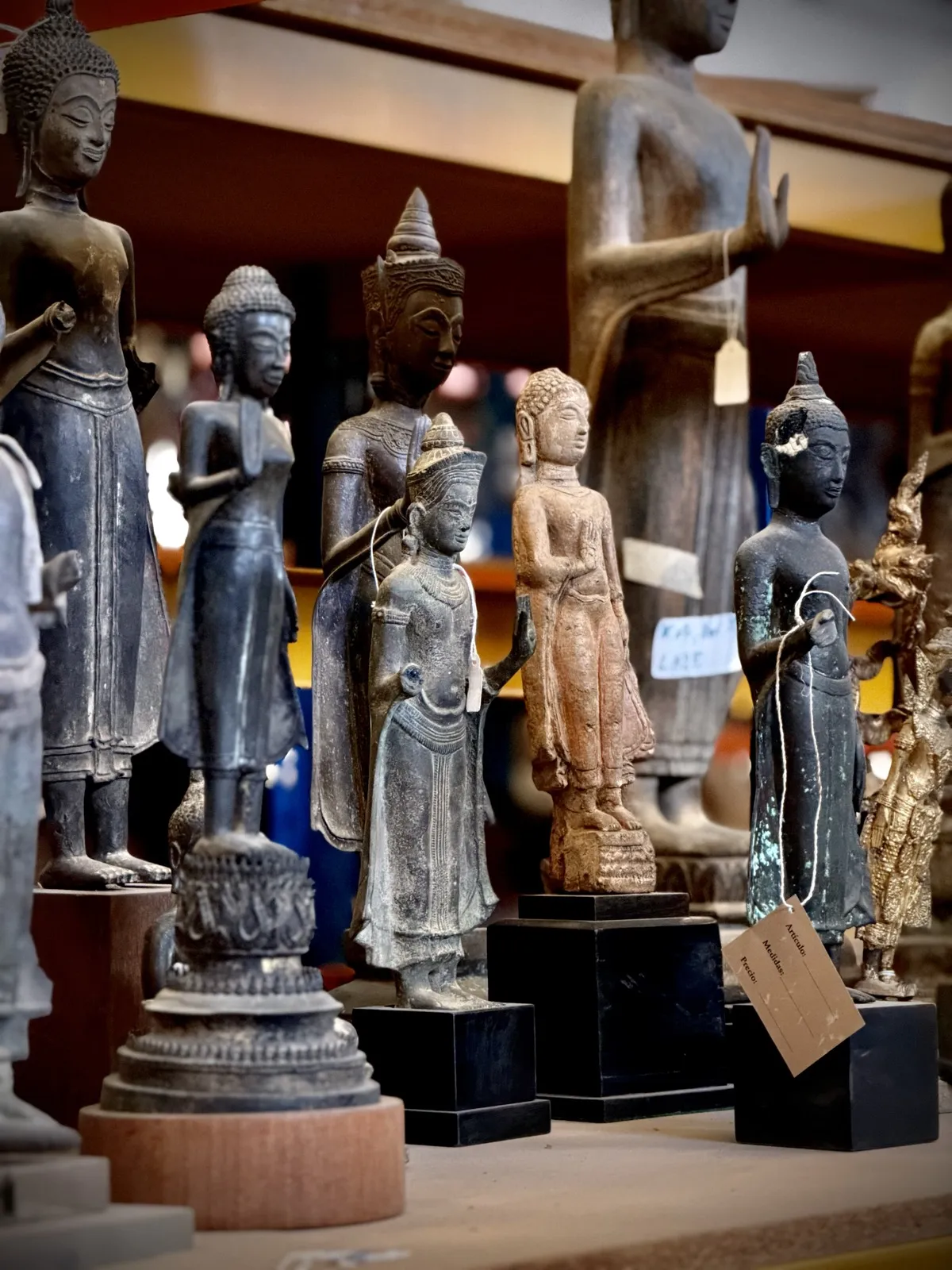
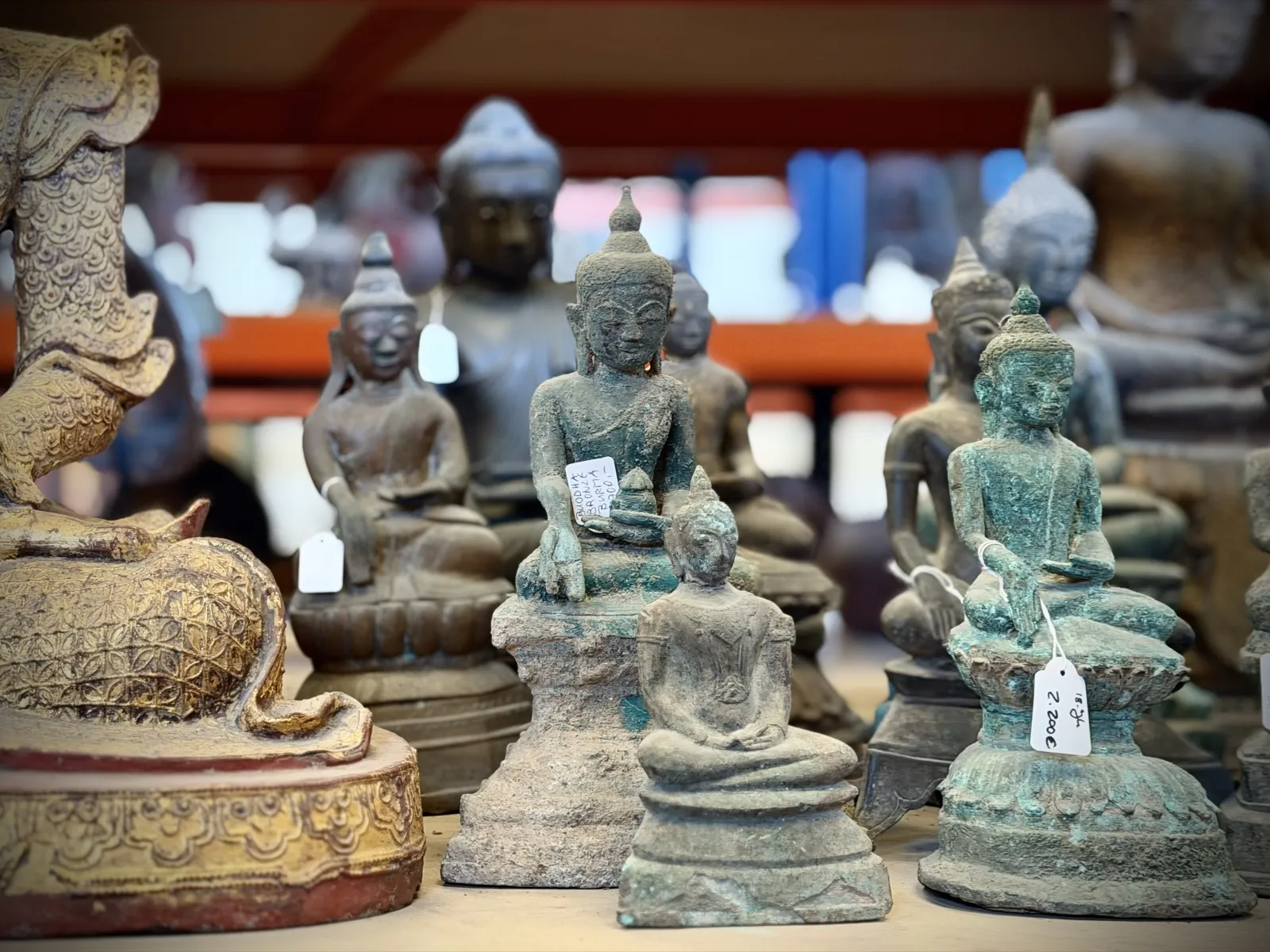
Then the same face, again and again, across centuries and kingdoms: Thai, Burmese, Khmer, Lao. Monumental stone heads with lowered eyes; standing bronzes with the gesture of reassurance; and votive figures by the hundred, cast small enough to hold. Repetition here is not sameness but devotion.

Dann dasselbe Gesicht, wieder und wieder, über Jahrhunderte und Königreiche: thailändisch, birmanisch, khmer, laotisch. Monumentale Steinköpfe mit gesenkten Augen; stehende Bronzen mit der Geste der Beschwichtigung; und Votivfiguren zu Hunderten, klein genug für die Hand gegossen. Wiederholung ist hier nicht Gleichheit, sondern Andacht.

Luego el mismo rostro, una y otra vez, a través de siglos y reinos: tailandés, birmano, jemer, laosiano. Cabezas monumentales de piedra con los ojos bajos; bronces de pie con el gesto de la confianza; y figuras votivas por centenares, fundidas lo bastante pequeñas para caber en la mano. La repetición aquí no es igualdad, sino devoción.

Weathered stone Buddha heads
Stone Buddha heads: lowered eyes, the tranquil half-smile repeated in stone.
Steinerne Buddha-Köpfe: gesenkte Augen, das ruhige Halblächeln in Stein wiederholt.
Cabezas de Buda en piedra: ojos bajos, la serena media sonrisa repetida en piedra.
Gilded Buddha heads in profile
Standing bronze Buddha figures
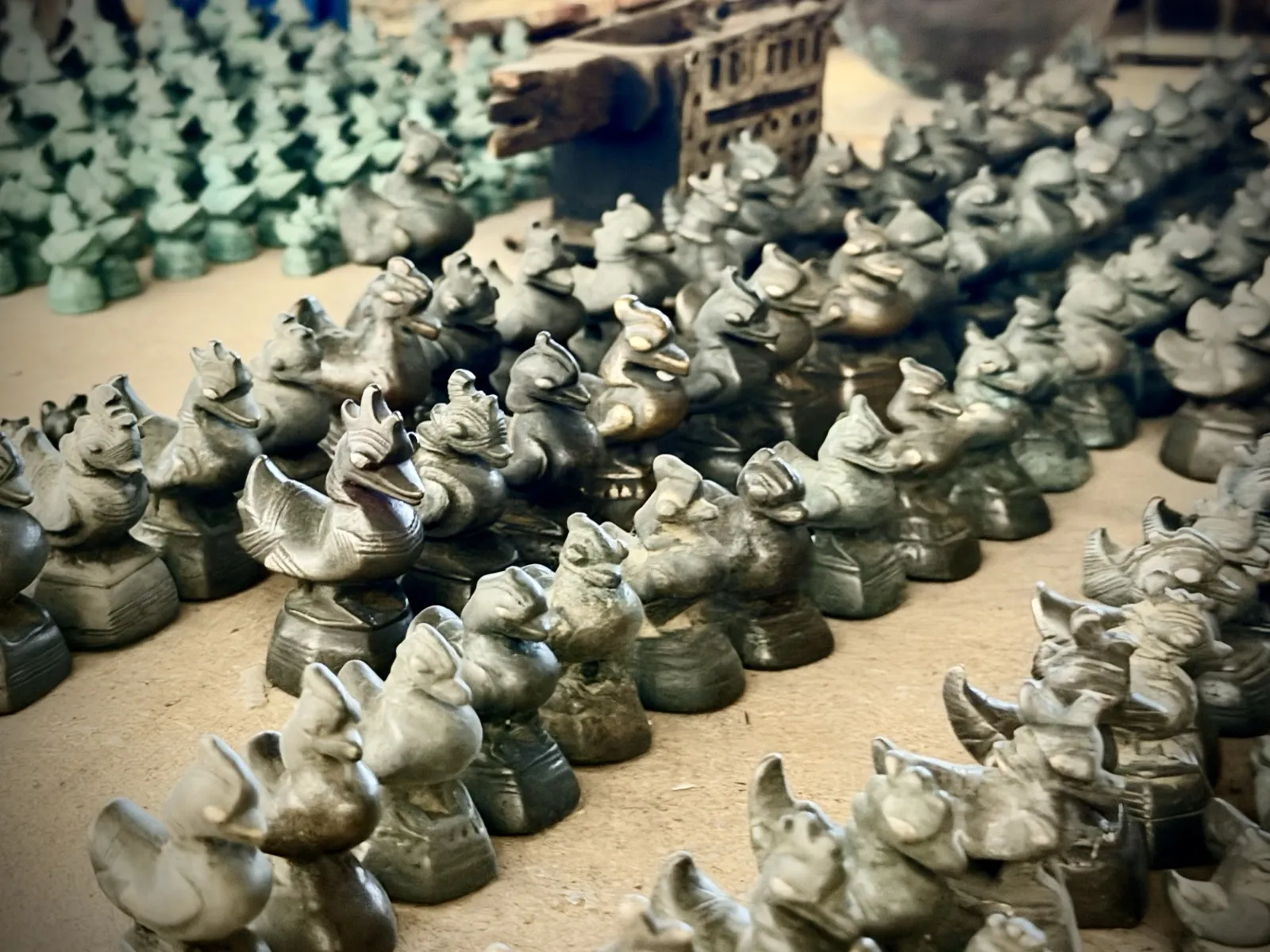
Small bronze seated Buddhas
Hundreds of small bronze Buddha figures arranged in rows
Votive bronzes in the hundred: the sheer arithmetic of belief.
Votivbronzen zu Hunderten: die schiere Arithmetik des Glaubens.
Bronces votivos por centenares: la pura aritmética de la fe.
Song–Ming & trade era

VII · Everyday & tradeAlltag & HandelVida cotidiana y comercio

The ordinary, carried across seas

Das Gewöhnliche, über Meere getragen

Lo cotidiano, llevado a través de los mares

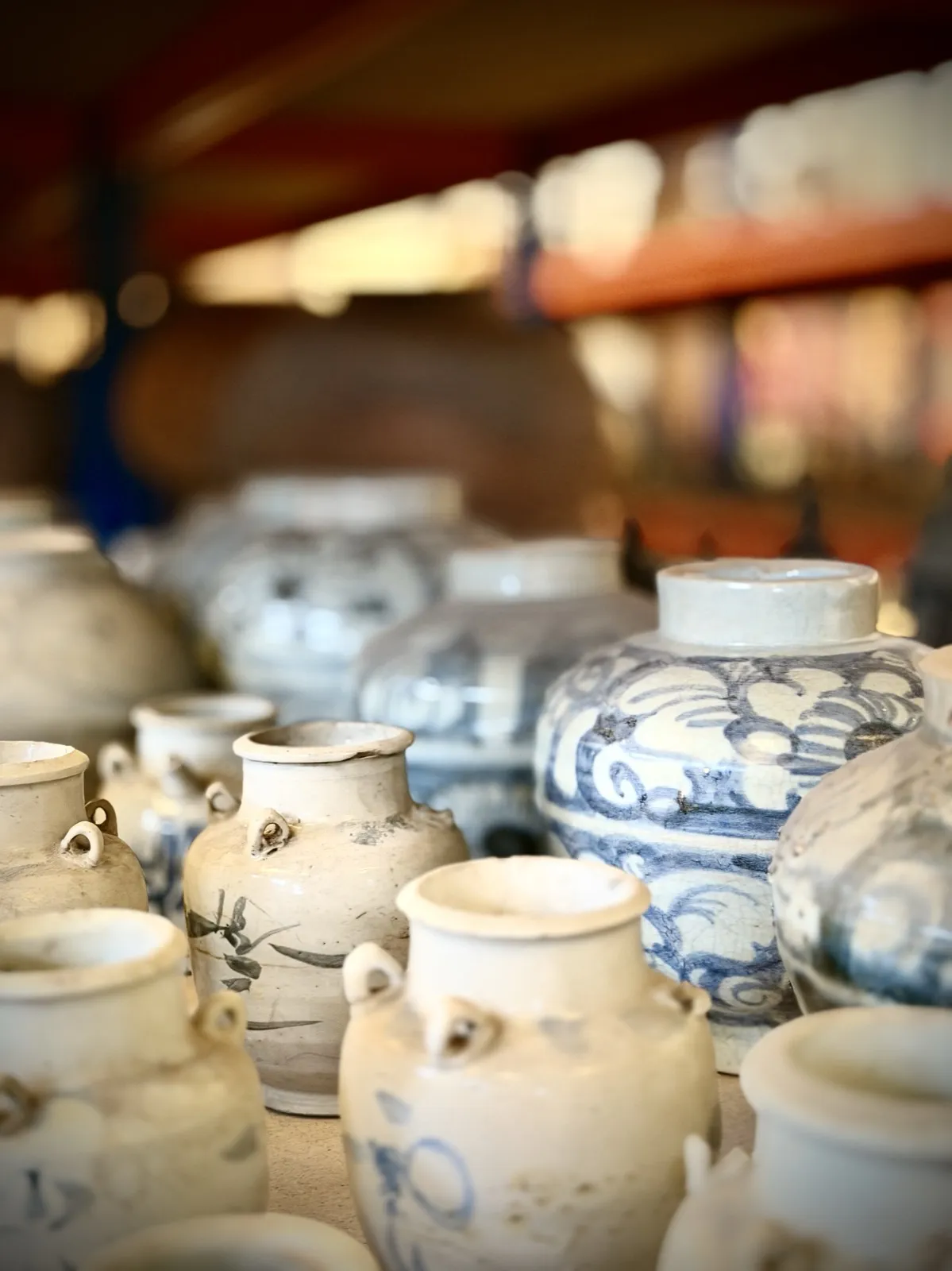
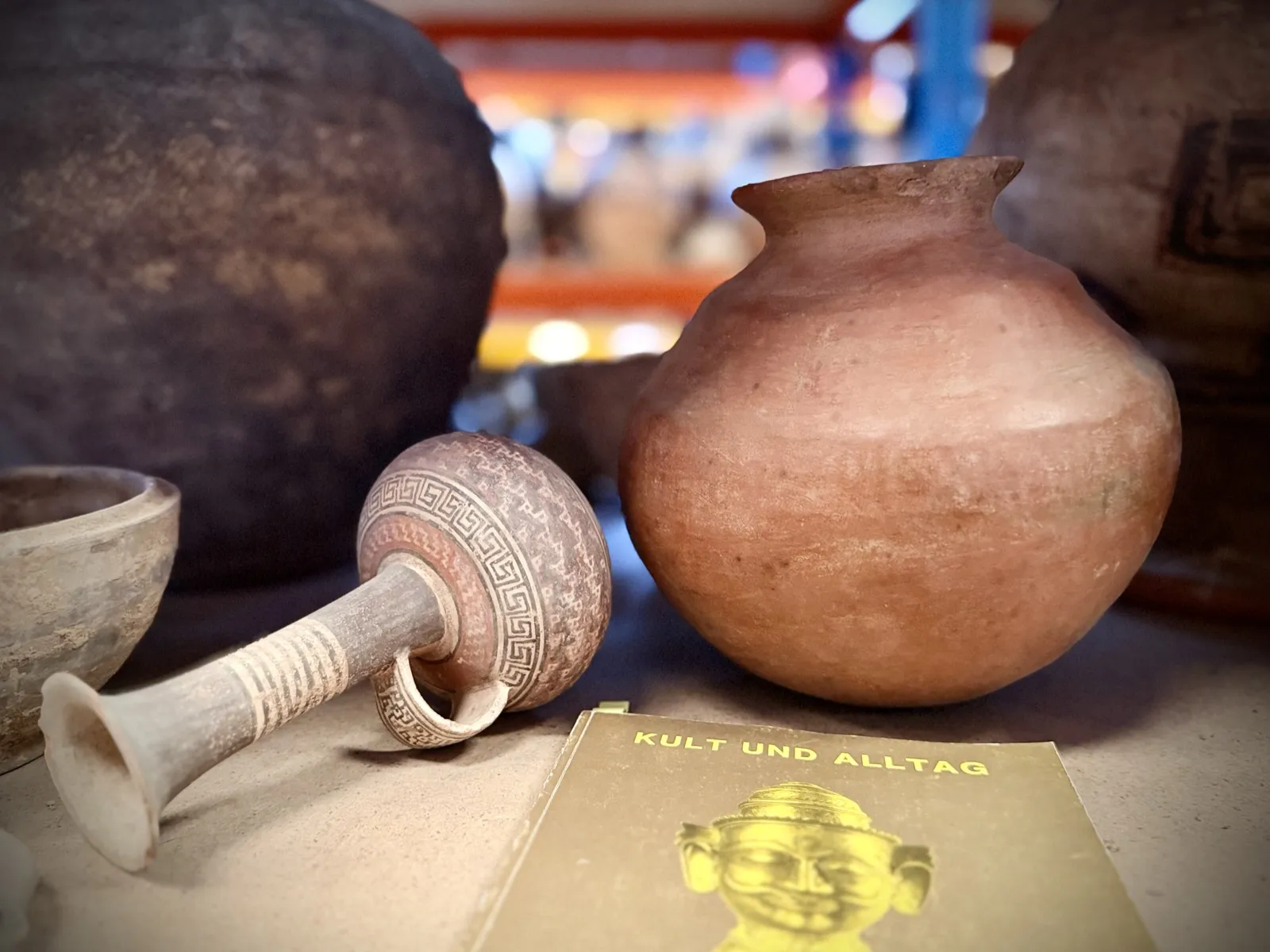
Not everything was made for gods or graves. Glazed jars and blue-and-white wares travelled the trade routes as cargo and kitchenware: the everyday objects that history rarely keeps. Beside them, vessels of cult and daily use from other shores round out the picture.

Nicht alles war für Götter oder Gräber gemacht. Glasierte Krüge und Blau-Weiß-Ware reisten als Fracht und Küchengut über die Handelswege: die Alltagsdinge, die die Geschichte selten bewahrt. Daneben ergänzen Gefäße aus Kult und täglichem Gebrauch anderer Küsten das Bild.

No todo se hizo para dioses o tumbas. Tinajas vidriadas y porcelana azul y blanca recorrieron las rutas comerciales como carga y menaje: los objetos cotidianos que la historia rara vez conserva. Junto a ellos, vasijas de culto y uso diario de otras costas completan el cuadro.

Blue-and-white and provincial glazed ceramic jars
Blue-and-white and provincial glazed jars: trade ceramics, survived intact.
Blau-Weiß- und provinzielle glasierte Krüge: Handelskeramik, unversehrt überliefert.
Tinajas azul y blanco y vidriadas provinciales: cerámica de comercio, conservada intacta.
Terracotta and painted vessels for cult and everyday use
Vessels of cult and everyday life: "Kult und Alltag," across cultures.
Gefäße aus Kult und Alltag: „Kult und Alltag", über Kulturen hinweg.
Vasijas de culto y vida cotidiana: «Kult und Alltag», a través de las culturas.
Ritual bronzes

VIII · In miniatureIm KleinenEn miniatura

Whole pantheons, palm-sized

Ganze Pantheons, handtellergroß

Panteones enteros, del tamaño de una palma

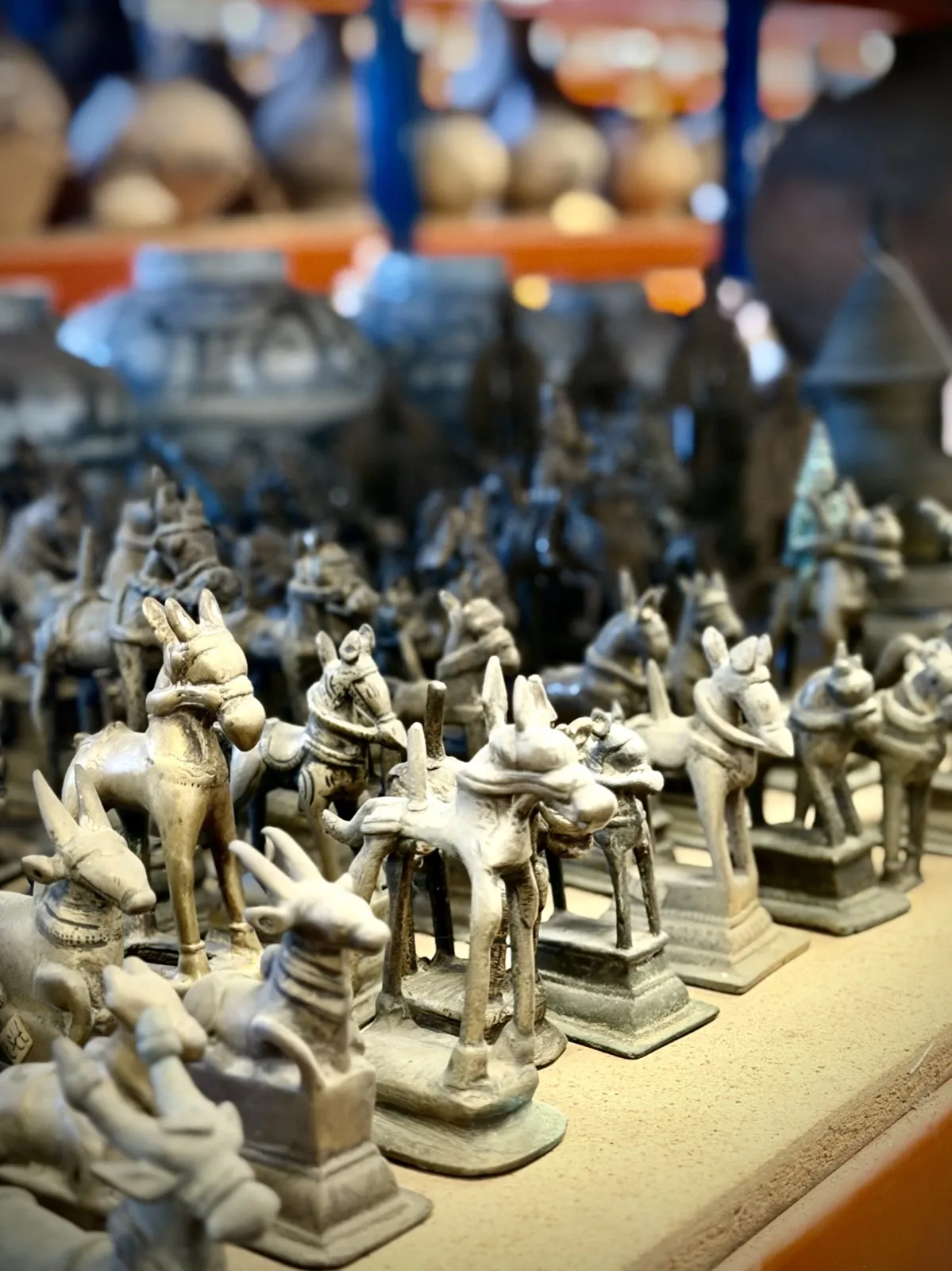
Cast bronze deities, mounts and ritual figures line up by the dozen: Ganesha, riders, sacred animals, each no taller than a hand. Multiplied across a shelf, the small becomes monumental: a portable cosmos of belief.

Gegossene Bronzegottheiten, Reittiere und Ritualfiguren reihen sich zu Dutzenden: Ganesha, Reiter, heilige Tiere, keines höher als eine Hand. Über ein Regal vervielfacht, wird das Kleine monumental: ein tragbarer Kosmos des Glaubens.

Deidades de bronce fundido, monturas y figuras rituales se alinean por docenas: Ganesha, jinetes, animales sagrados, ninguno más alto que una mano. Multiplicado a lo largo de una estantería, lo pequeño se vuelve monumental: un cosmos portátil de la fe.

Rows of small cast-bronze ritual figures
Rows of small bronze deity figures
Small ritual bronzes, ranked by the dozen: a devotional multitude.
Kleine Ritualbronzen, zu Dutzenden aufgereiht: eine andächtige Vielzahl.
Pequeños bronces rituales, alineados por docenas: una multitud devota.
Court art, Benin

IX · Africa's courtsAfrikas HöfeLas cortes de África

The bronze memory of a kingdom

Das bronzene Gedächtnis eines Königreichs

La memoria de bronce de un reino

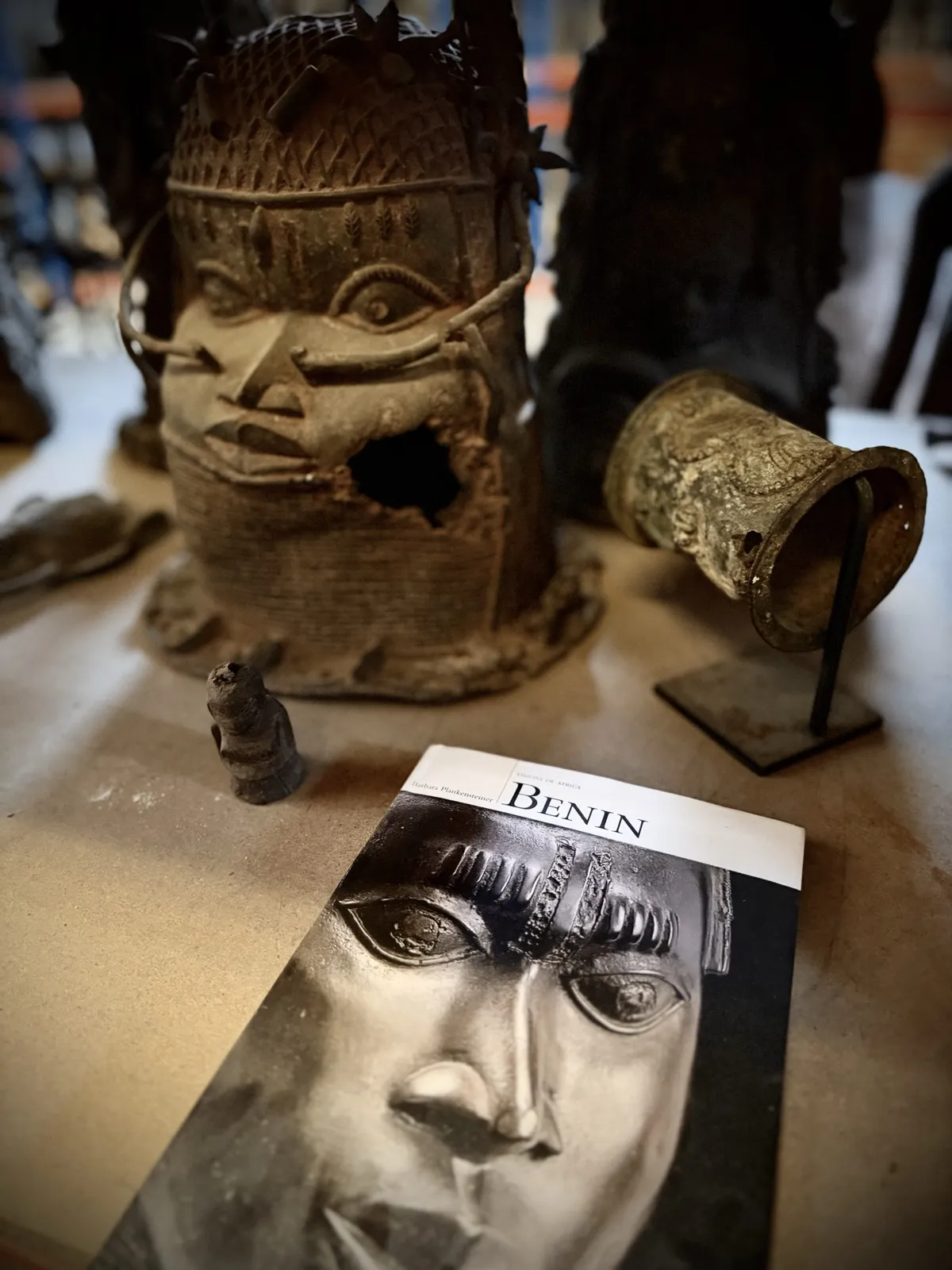
West Africa held courts as sophisticated as any in Europe. The brass and bronze heads in the tradition of Benin were royal memory made permanent: commemorative portraits of a power that cast its own history in metal.

Westafrika unterhielt Höfe, so kultiviert wie irgendeiner in Europa. Die Messing- und Bronzeköpfe in der Tradition von Benin waren königliches Gedächtnis, dauerhaft gemacht: Gedenkbildnisse einer Macht, die ihre eigene Geschichte in Metall goss.

África occidental tuvo cortes tan refinadas como cualquiera de Europa. Las cabezas de latón y bronce de la tradición de Benín eran memoria real hecha permanente: retratos conmemorativos de un poder que fundió su propia historia en metal.

Benin-tradition bronze head with brass bell
Benin-tradition brass and bronze: commemorative court sculpture.
Messing und Bronze der Benin-Tradition: kommemorative Hofskulptur.
Latón y bronce de la tradición de Benín: escultura cortesana conmemorativa.
19th–20th century

X · West & Central AfricaWest- & ZentralafrikaÁfrica occidental y central

A gathering of spirits

Eine Versammlung der Geister

Una reunión de espíritus

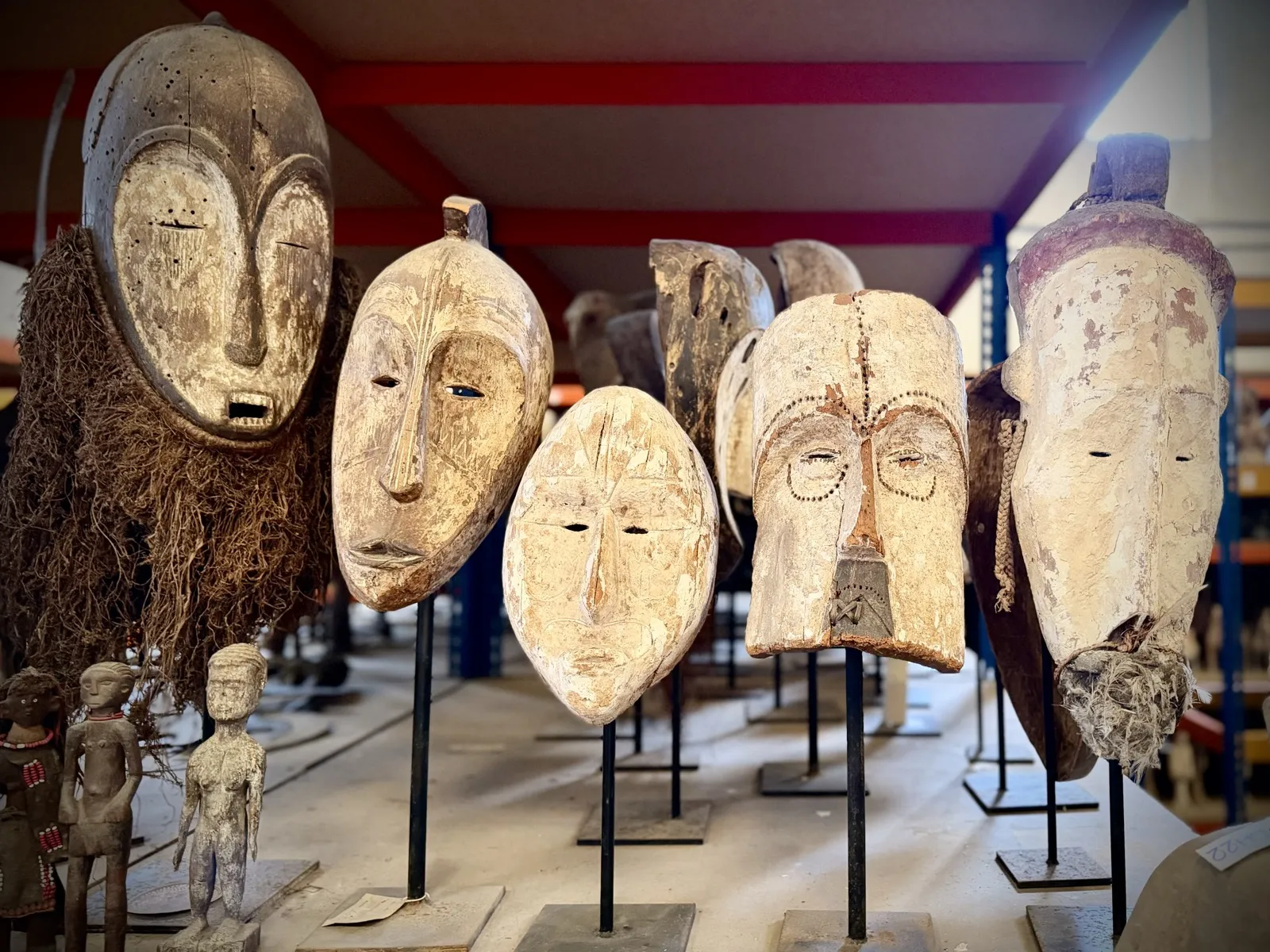
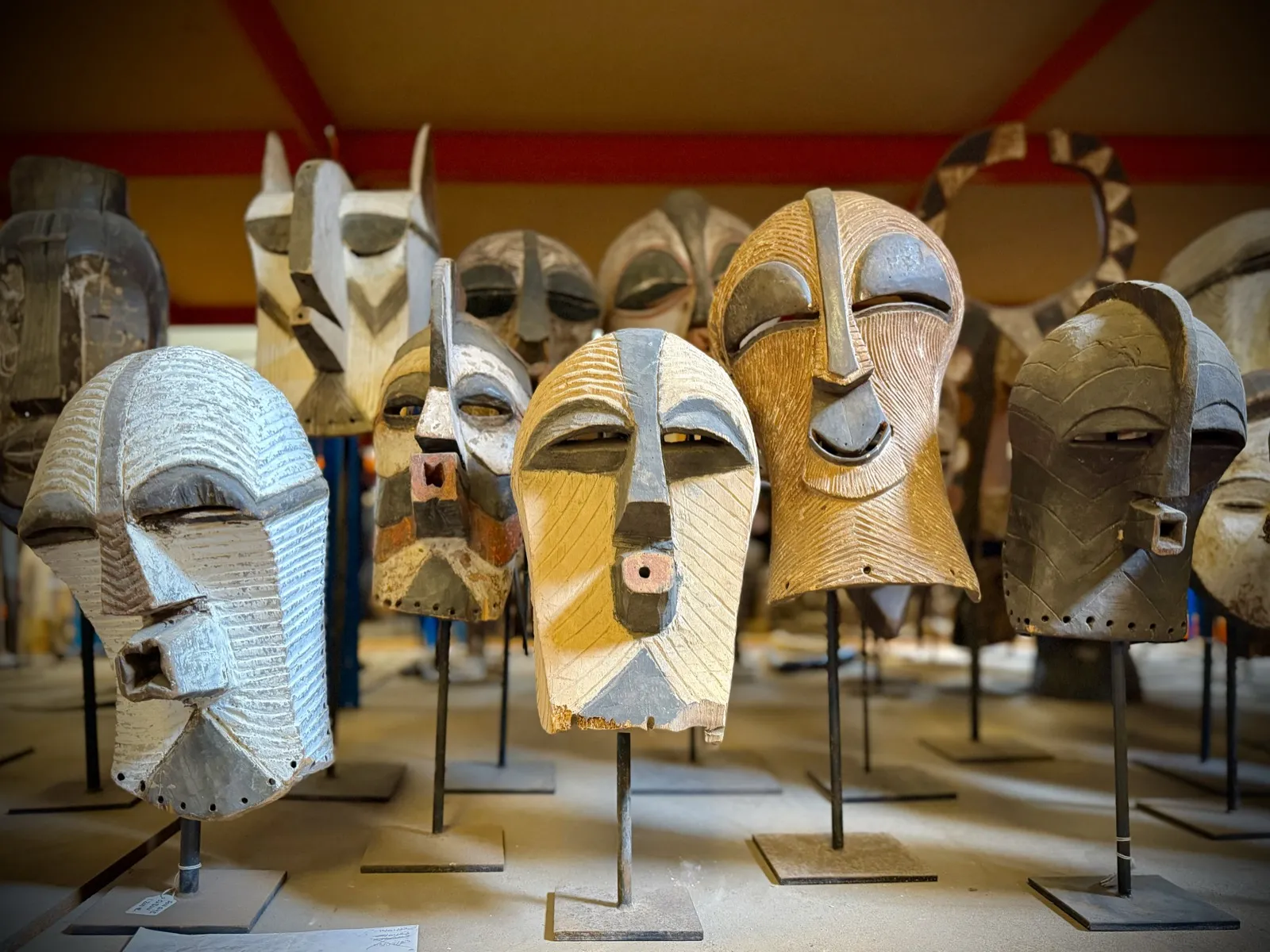
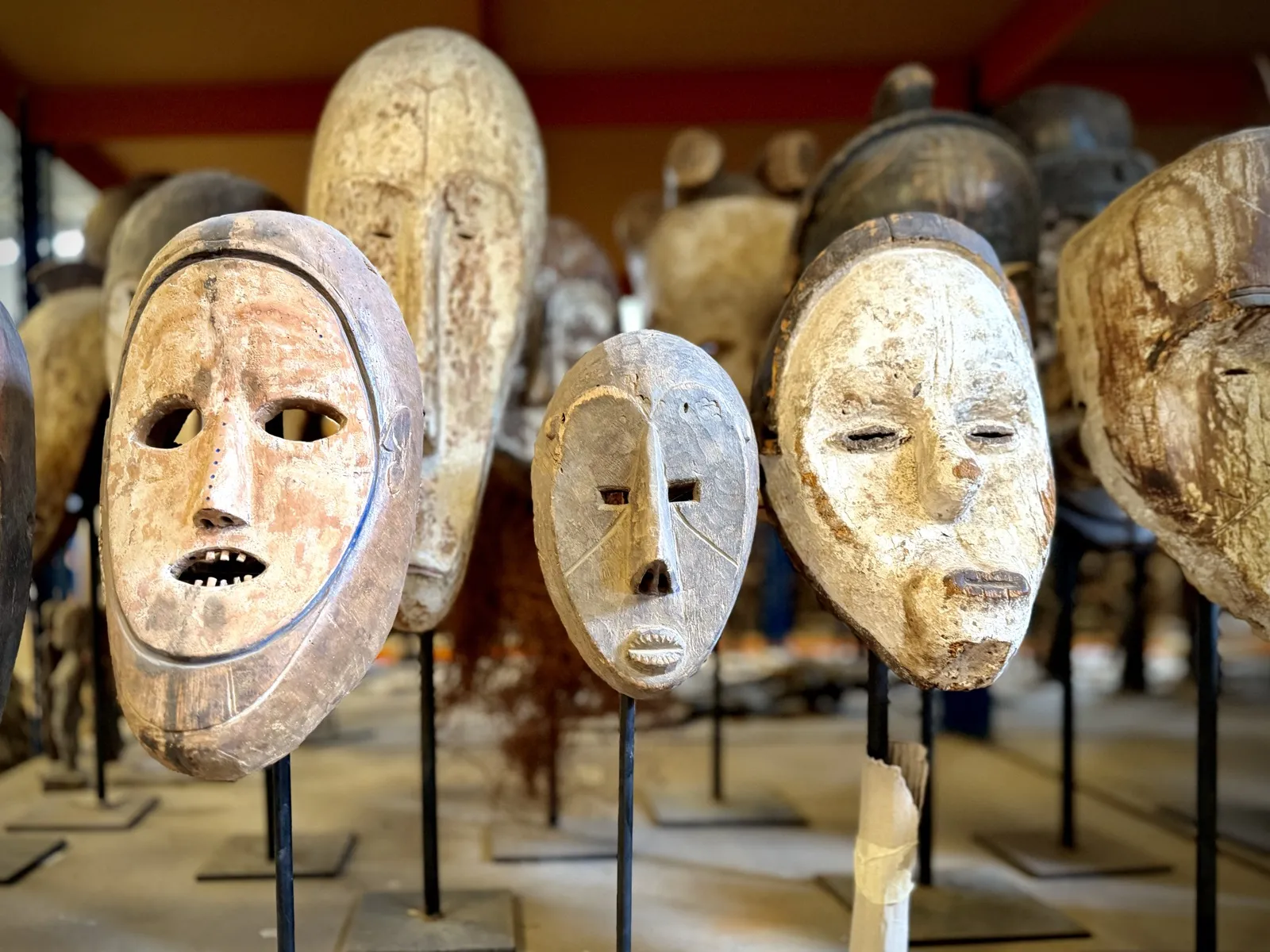
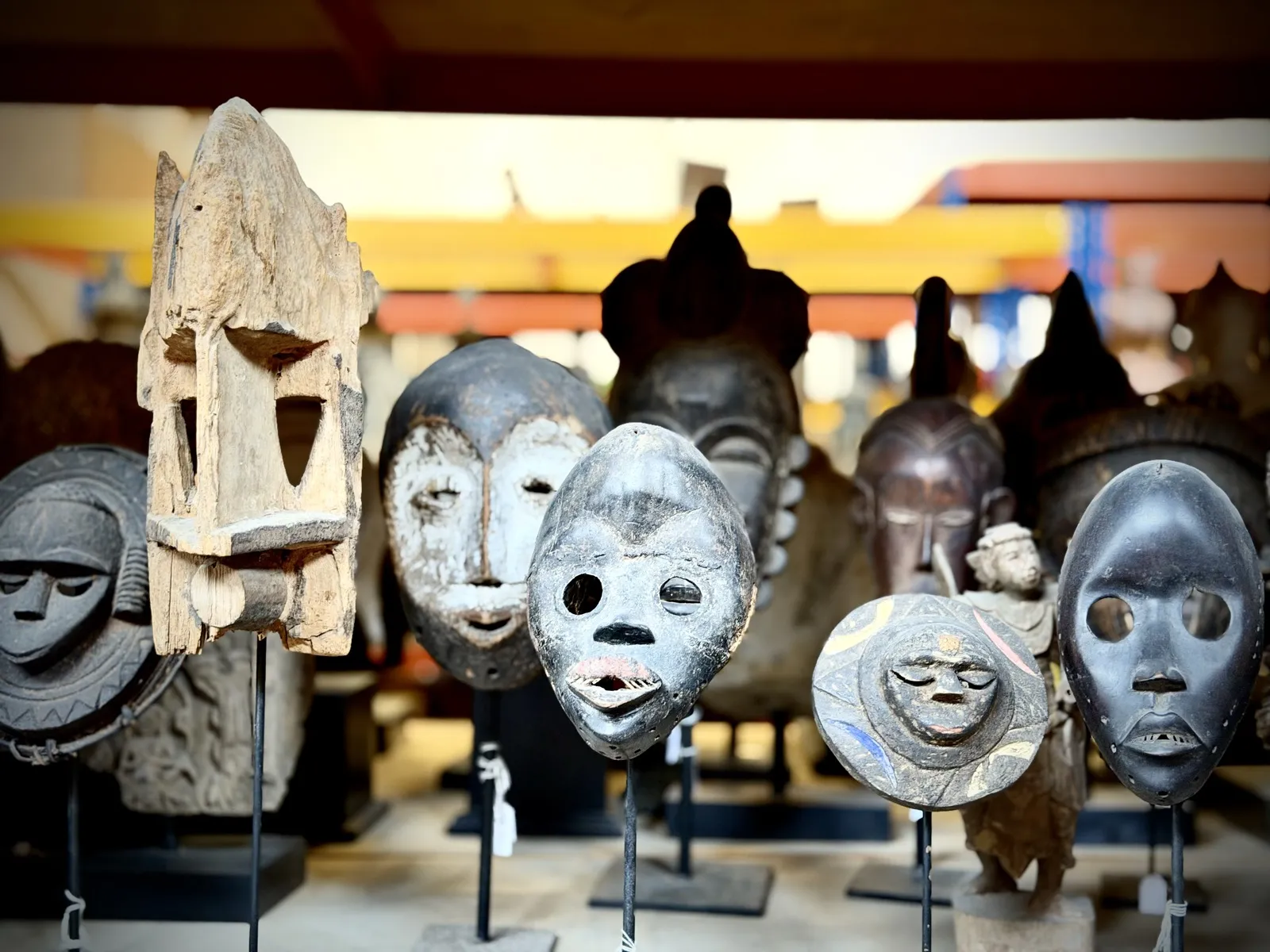
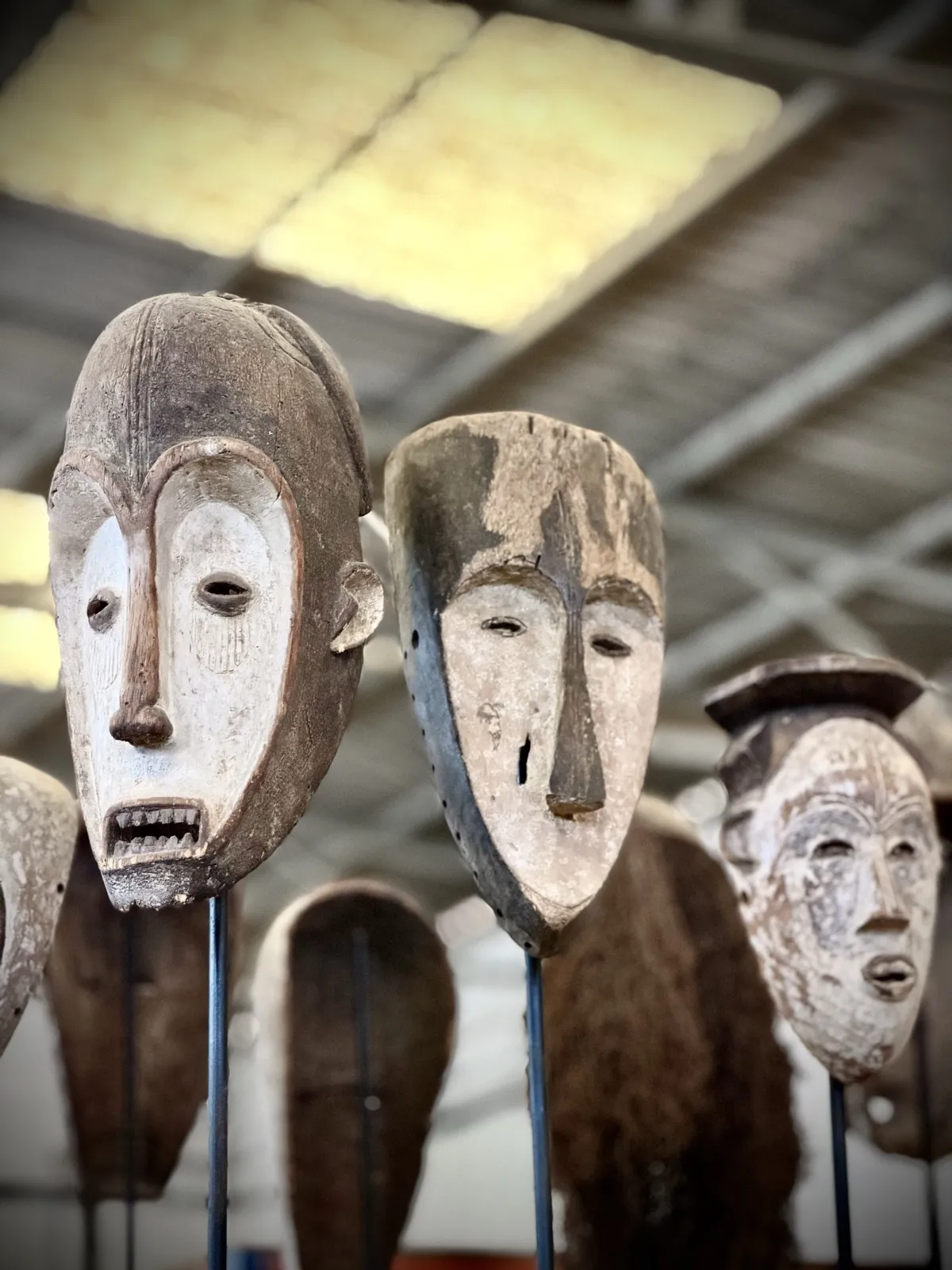
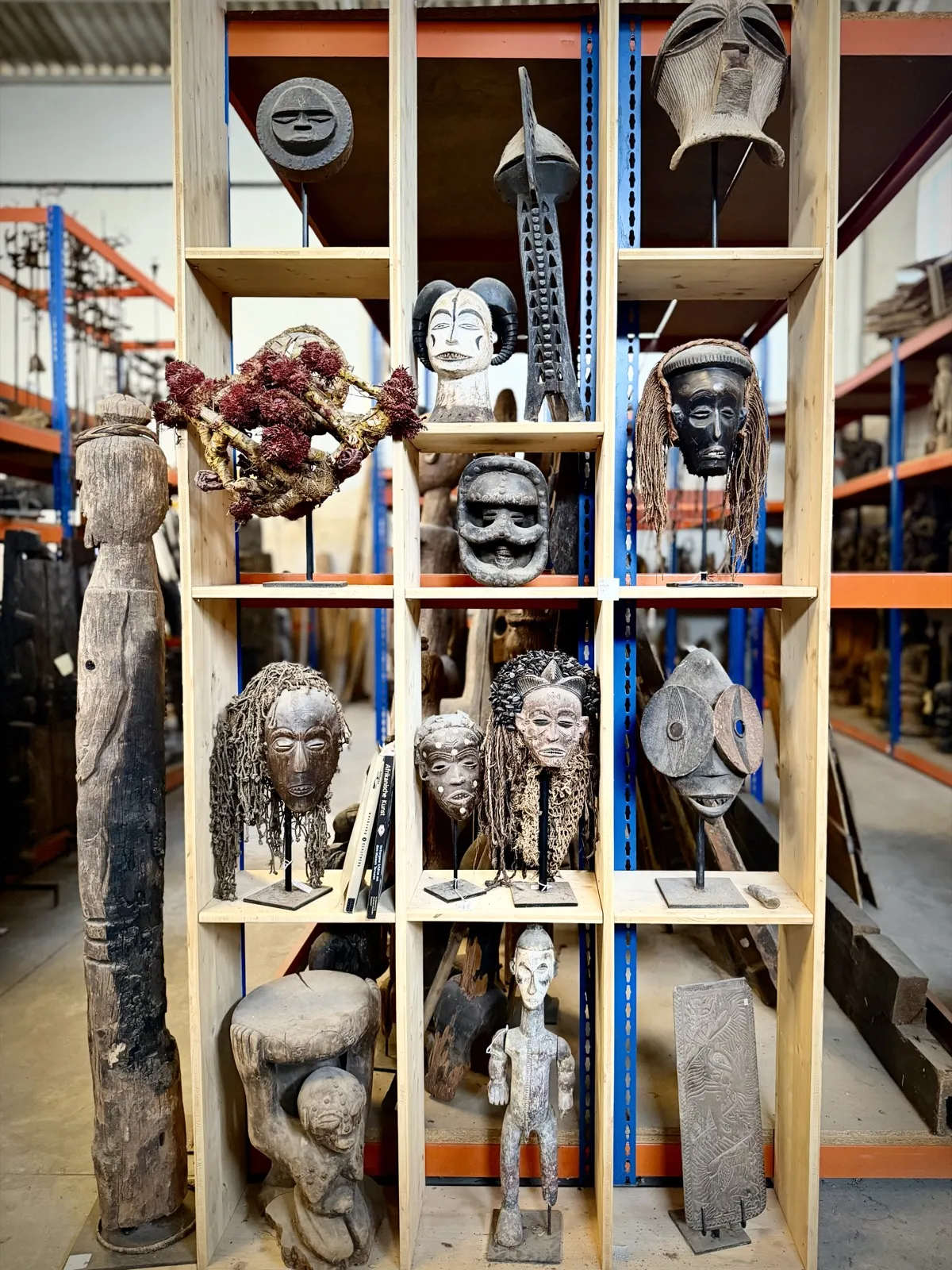
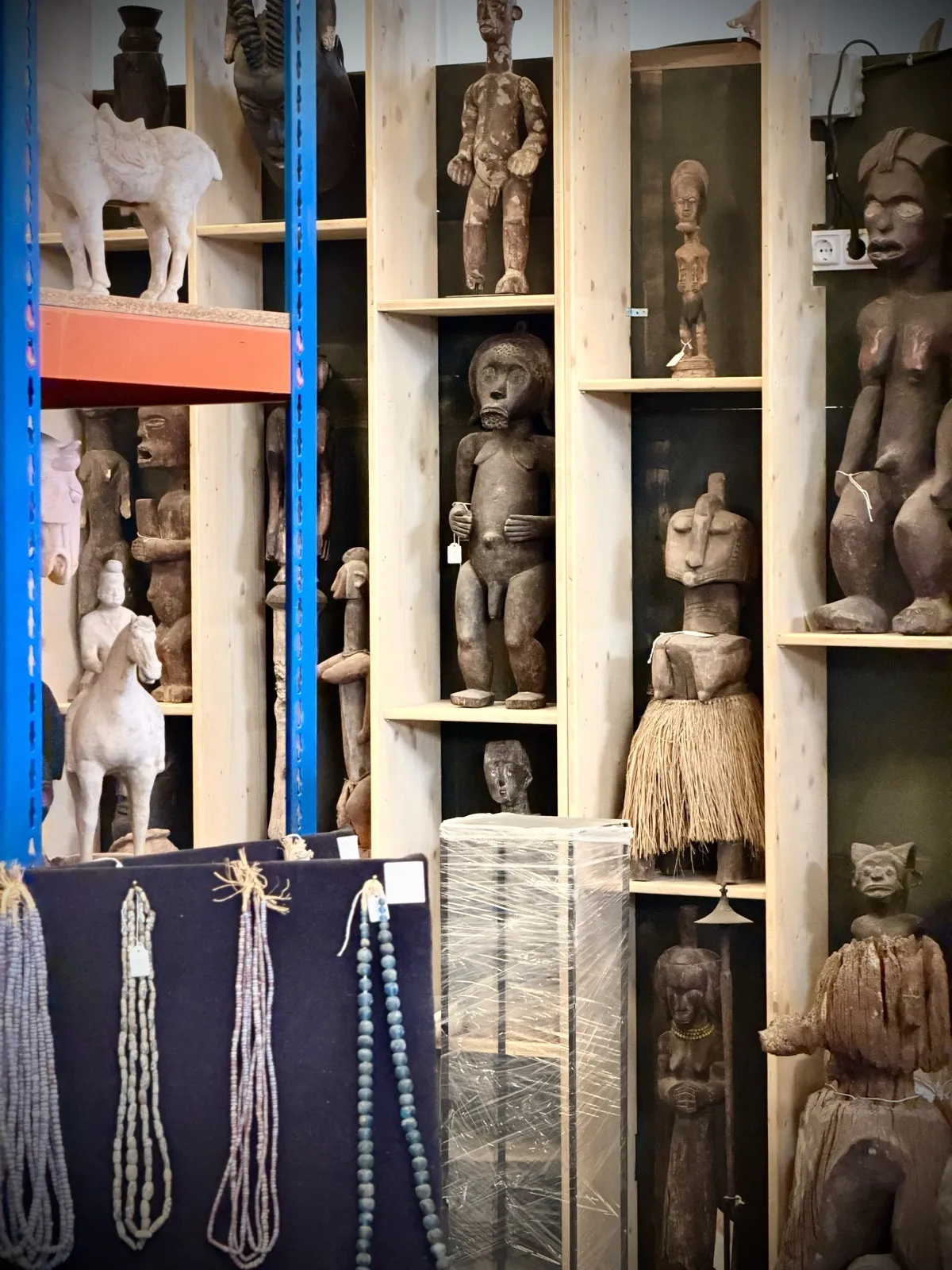
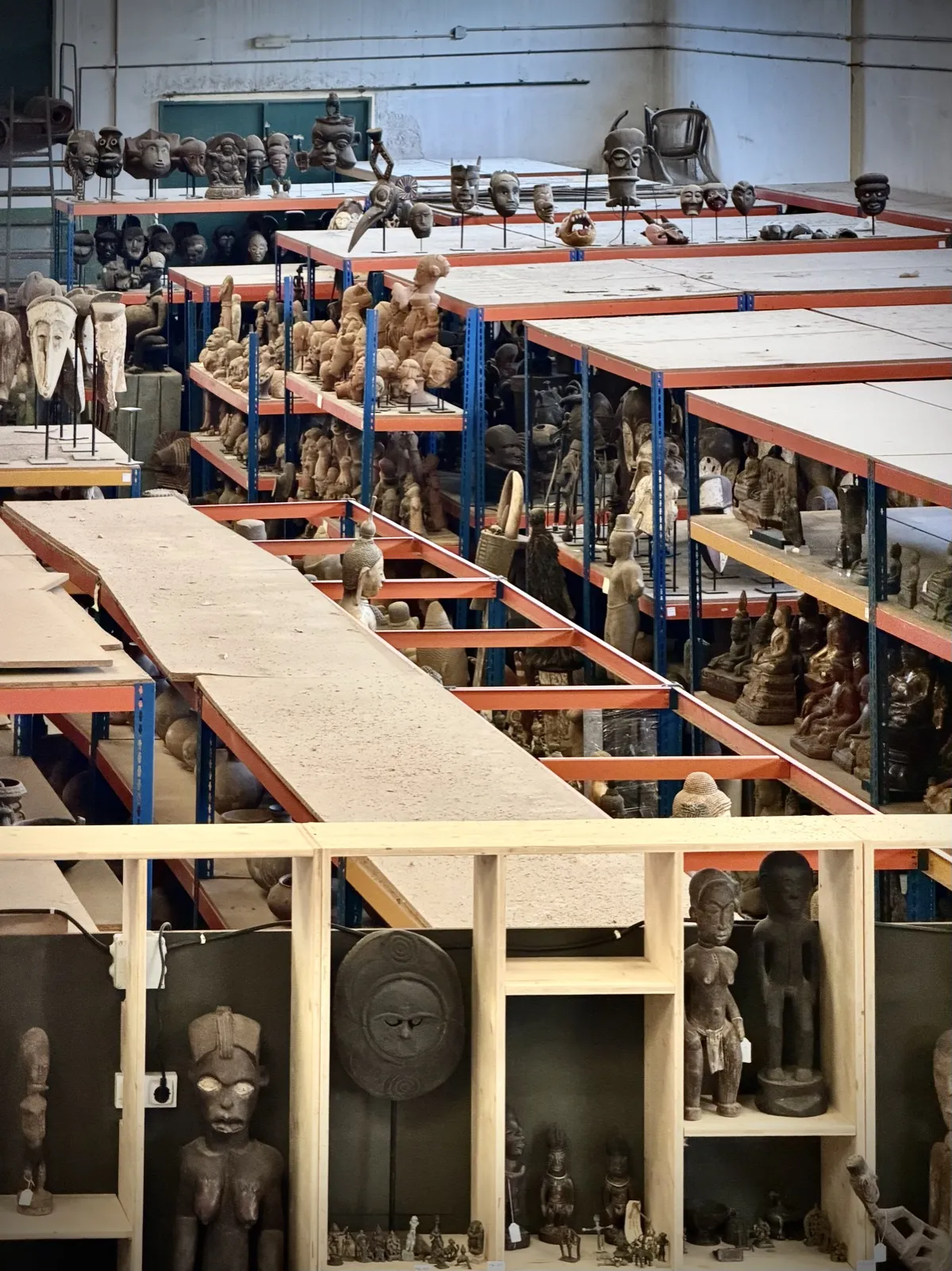
The largest body in the collection is ethnographic: masks and figures of the nineteenth and twentieth centuries, Fang, Punu, Songye, Dan, Dogon, Kota and more. White faces of the ancestors, striped Kifwebe, reliquary guardians. Not ancient, but living art: carved to be worn, danced, and believed.

Der größte Bestand der Sammlung ist ethnographisch: Masken und Figuren des neunzehnten und zwanzigsten Jahrhunderts, Fang, Punu, Songye, Dan, Dogon, Kota und mehr. Weiße Ahnengesichter, gestreifte Kifwebe, Reliquienwächter. Nicht antik, sondern lebendige Kunst: geschnitzt, um getragen, getanzt und geglaubt zu werden.

El conjunto más amplio de la colección es etnográfico: máscaras y figuras de los siglos XIX y XX, Fang, Punu, Songye, Dan, Dogon, Kota y más. Rostros blancos de los antepasados, Kifwebe rayados, guardianes de relicarios. No antiguo, sino arte vivo: tallado para ser llevado, bailado y creído.

White ancestral masks of West and Central Africa on stands
Pale ancestral masks in the Fang / Kwele manner: a row of watching faces.
Bleiche Ahnenmasken im Fang- / Kwele-Stil: eine Reihe wachender Gesichter.
Máscaras ancestrales pálidas al modo Fang / Kwele: una hilera de rostros que observan.
Striped Kifwebe-style masks
Various carved African masks
Assorted African masks including Dogon
Tall carved masks seen against warehouse light
Shelf of African figures, masks and a reliquary guardian
African figures with beadwork and a Chinese horse
Kifwebe stripes, reliquary guardians, ancestral figures: a continent of hands.
Kifwebe-Streifen, Reliquienwächter, Ahnenfiguren: ein Kontinent von Händen.
Rayas Kifwebe, guardianes de relicarios, figuras ancestrales: un continente de manos.
The paper trail

XI · ProvenanceProvenienzProcedencia

Every object carries its history

Jedes Objekt trägt seine Geschichte

Cada objeto lleva su historia

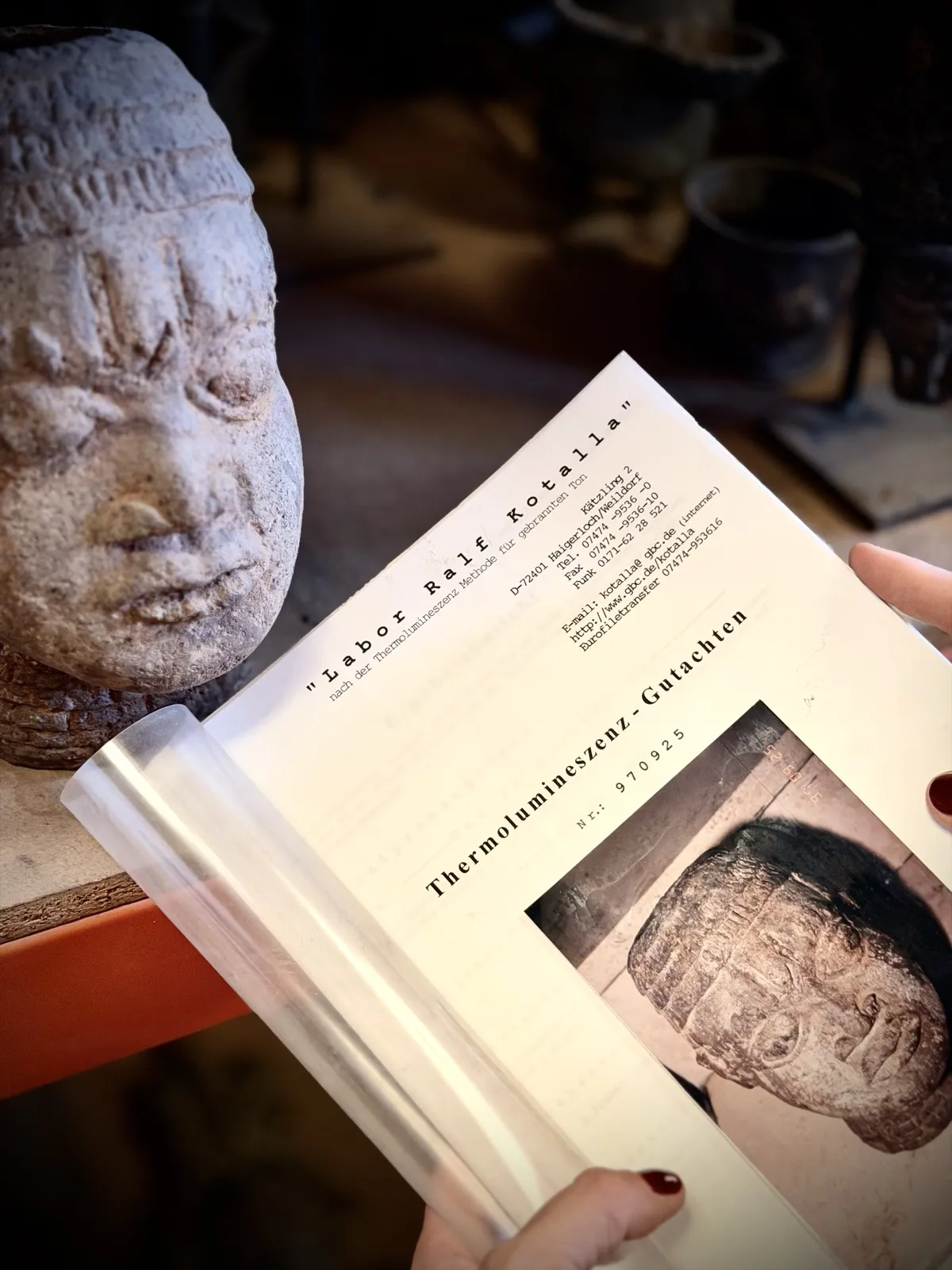
Age is not asserted; it is examined. Where it matters, pieces are backed by laboratory reports, thermoluminescence dating among them, and origin, acquisition route and condition are recorded object by object. Documented and undocumented history are kept clearly apart, and modern reproductions are identified as such.

Alter wird nicht behauptet; es wird geprüft. Wo es zählt, sind Stücke durch Laborgutachten belegt, darunter Thermolumineszenz-Datierung, und Herkunft, Erwerbsweg und Zustand werden Objekt für Objekt festgehalten. Dokumentierte und undokumentierte Geschichte werden klar getrennt, und moderne Reproduktionen als solche gekennzeichnet.

La antigüedad no se afirma; se examina. Donde importa, las piezas están respaldadas por informes de laboratorio, entre ellos la datación por termoluminiscencia, y el origen, la vía de adquisición y el estado se registran objeto por objeto. La historia documentada y la no documentada se mantienen claramente separadas, y las reproducciones modernas se identifican como tales.

A thermoluminescence dating report beside a stone head
A thermoluminescence report beside the piece it dates: evidence, not assertion.
Ein Thermolumineszenz-Gutachten neben dem Stück, das es datiert: Beleg statt Behauptung.
Un informe de termoluminiscencia junto a la pieza que data: prueba, no afirmación.
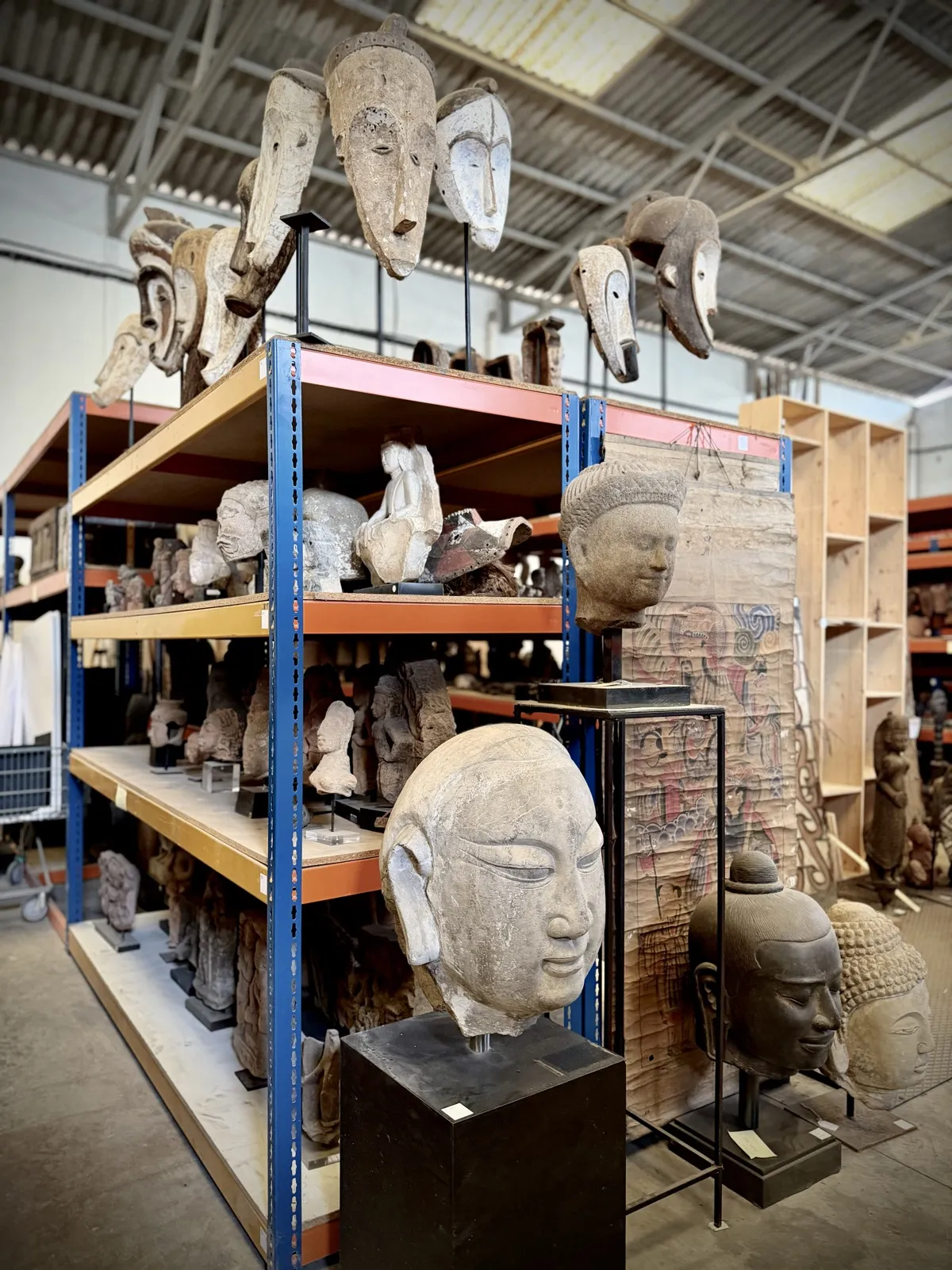
Mixed storage shelves with African masks and stone Buddha heads
Continents share a shelf, but never a record; each entry stands on its own.
Kontinente teilen ein Regal, doch nie einen Eintrag; jeder steht für sich.
Los continentes comparten una estantería, pero nunca un registro; cada entrada se sostiene por sí sola.

One collection. Five continents. Shown by appointment.

Eine Sammlung. Fünf Kontinente. Besichtigung nach Vereinbarung.

Una colección. Cinco continentes. Visitas con cita previa.

This journey shows a fraction. The full holding, around 9,500 objects, can be browsed by category, era, origin and material, or seen in person on Mallorca.

Dieser Rundgang zeigt einen Bruchteil. Der gesamte Bestand, rund 9.500 Objekte, lässt sich nach Kategorie, Epoche, Herkunft und Material durchsuchen oder persönlich auf Mallorca besichtigen.

Este recorrido muestra una fracción. El fondo completo, unos 9.500 objetos, puede consultarse por categoría, época, origen y material, o verse en persona en Mallorca.

Attributions here describe traditions, types and periods rather than certified individual provenance; dating of certain traditions (e.g. Nok) follows conservative, museum-aligned ranges. The collection is deliberately broad: a significant part is nineteenth- and twentieth-century ethnographic art, and some pieces are modern reproductions, disclosed as such. Prices are individual and on request.

Zuschreibungen beschreiben hier Traditionen, Typen und Epochen, nicht zertifizierte Einzelprovenienzen; die Datierung bestimmter Traditionen (z. B. Nok) folgt konservativen, museumsnahen Spannen. Die Sammlung ist bewusst breit: ein wesentlicher Teil ist ethnographische Kunst des 19. und 20. Jahrhunderts, und einige Stücke sind moderne Reproduktionen, als solche gekennzeichnet. Preise sind individuell und auf Anfrage.

Las atribuciones describen aquí tradiciones, tipos y épocas, no procedencias individuales certificadas; la datación de ciertas tradiciones (p. ej. Nok) sigue rangos conservadores, alineados con los museos. La colección es deliberadamente amplia: una parte significativa es arte etnográfico de los siglos XIX y XX, y algunas piezas son reproducciones modernas, declaradas como tales. Los precios son individuales y a petición.